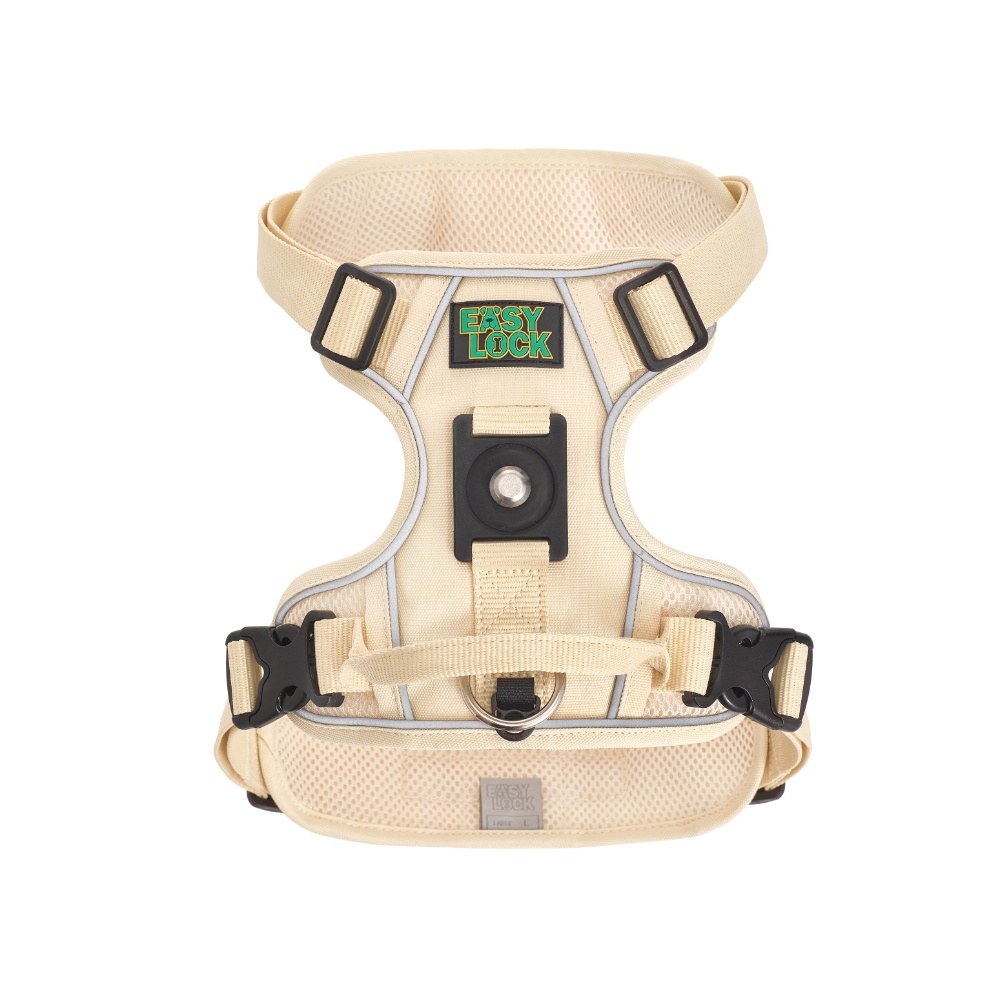
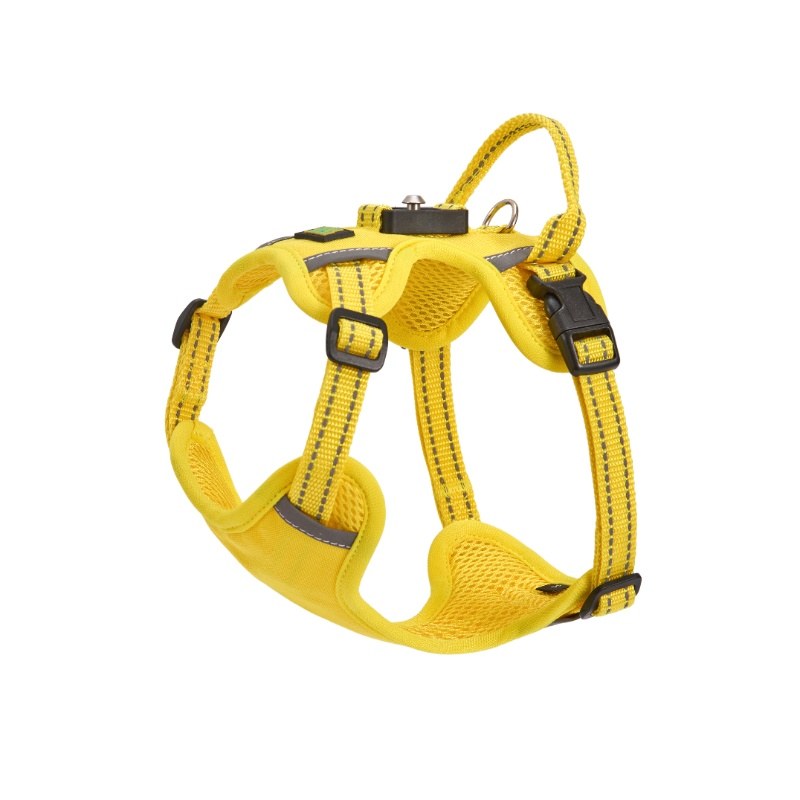
Reflective Dog Harness Wholesale: A Sourcing Guide for Pet Product Buyers
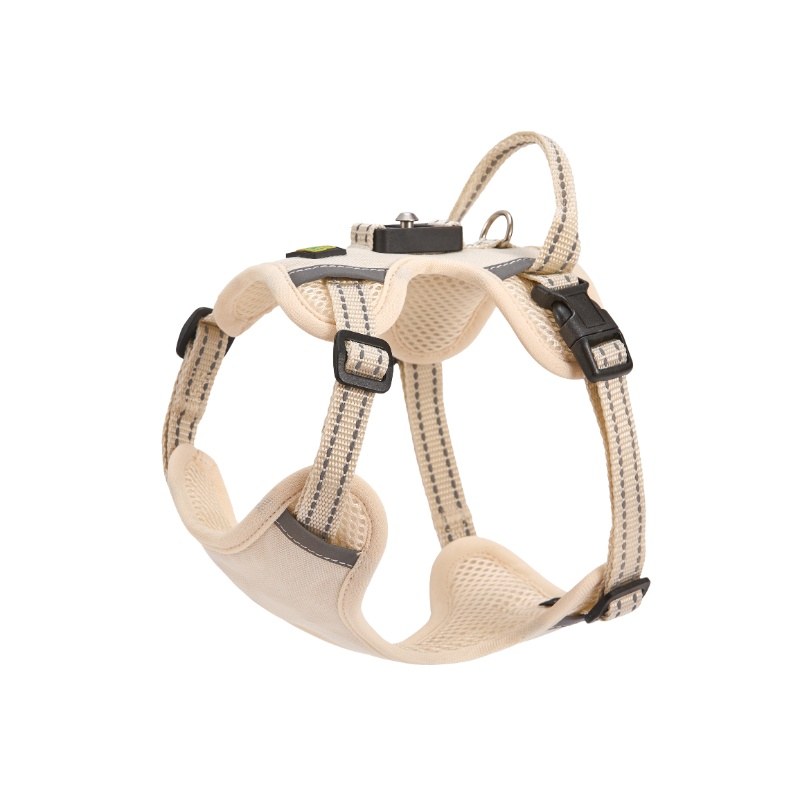
Reflective harnesses are the one category where the customer cannot judge quality at the shelf. The difference only appears at night, in rain, after twenty washes — which makes sourcing discipline more important here than in any other harness segment.
Wholesale reflective dog harness sourcing rests on five checks: verified retroreflection before and after washing, stitched or woven attachment, a base fabric that does not bleed onto the trim, a defensible packaging claim, and a supply rhythm matched to a seasonal category. Miss any one and the product sells well in month one and generates complaints in month six. The failure is rarely dramatic, which is exactly what makes it expensive.
This guide works through why the category carries unusual risk, the four pieces of evidence worth demanding before an order, a pre-shipment test any buyer can run without a laboratory, and the timing logic that seasonal demand forces on the supply chain. It ends with the packaging wording that keeps a claim defensible and the four red flags visible in a quotation before anything physical is sent.
Why This Category Carries Different Risk
Three characteristics separate reflective programmes from standard harness programmes, and all three push risk away from the buyer's field of view. The performance attribute is invisible at the point of sale: fit, stitching and hardware can be assessed in the hand, while retroreflection cannot, so verification depends on documentation and testing rather than inspection.
Performance also degrades rather than fails. A broken buckle is unambiguous, but a band that has lost forty percent of its return still looks like a band, so complaints arrive late and in small numbers that never trigger an investigation. Demand is seasonal and weather-linked as well, with orders concentrating into darker months, which pushes buyers toward late placement and short lead times — precisely when material substitution becomes tempting.
Four Pieces of Evidence Before You Commit
Ask for material identification, attachment method, wash-cycle data on the assembled product, and a stated pass criterion, then treat the absence of any one as a reason to slow down. Material identification means the family, the grade and the manufacturer rather than the phrase "reflective tape"; a supplier who cannot name the source is buying on the spot market and cannot promise the next lot matches.
Attachment method should be written down: stitched border, stitched through, woven in, or bonded. Bonded film is the cheapest option and the only one that reliably fails in a washing machine. Wash data must come from the assembled product, because a swatch test excludes seams, hardware and multiple layers that change behaviour in a drum, and a pass criterion needs a number, a method and a sample size rather than the phrase "good reflectivity".
A Pre-Shipment Test Any Buyer Can Run
Take three units from the lot, wash them per the care label, dry them, and compare against an unwashed unit in a dark room with a phone torch at eye height. Photograph each at the same distance and exposure. The comparison gives no number, but it reliably reveals delamination, cracking and severe dulling, which are the three failures that matter commercially.
Run the same check on a retained sample from the previous order, because lot-to-lot drift shows up faster in a side-by-side than in a specification review. Keep that retained sample sealed and labelled with its lot number, since a comparison without provenance is only an impression.
Timing a Reflective Dog Harness Wholesale Order
A reflective dog harness wholesale order should be placed against the material lead time rather than the assembly lead time, because reflective trim and base webbing are usually the longest items and the least visible in a quotation. For a repeat order in an existing colour, assembly dominates and the window is short; for a new colour or a new trim grade, dyeing and material preparation dominate and the window is much longer.
Place the core order before the season turns and keep a small buffer in the same specification, then confirm the production slot in writing once the material grade is locked. A slot without a locked grade can be filled with a substitute, and substitution is the source of most seasonal quality complaints. Warehouse conditions matter more than most buyers expect, since cartons stored against a sun-facing wall can reach temperatures that soften adhesive and stress bonded trim before the product is sold, while compression marks on reflective trim do not recover.
Return data is the cheapest specification tool available. Grouping complaints by trim position shows whether the problem sits at a curve, a contact patch or the packaging fold, and comparing that grouping against the previous season tells you whether the cause is design or material. If the same position fails across suppliers, the cause is design.
Seasonality and Inventory Logic
Place the core order early against a confirmed material grade, and keep a smaller buffer of the same specification rather than a larger buffer of a cheaper one. A second specification introduced mid-season creates two performance profiles in the market and two sets of complaints, and the cheaper one always generates more of them. That is a reputation cost paid by the premium product as well.
Size curve planning follows standard harness logic: core colours across the full run and accents in middle sizes. Reflective products skew slightly toward adult sizes bought for regular walks, because the motivation is functional rather than fashionable, so a range weighted toward small sizes for visual reasons will leave the middle of the curve short.
Packaging and Claims: Where Liability Is Created
Three rules keep reflective packaging defensible, and all three concern wording rather than design. Describe the feature rather than the outcome: "reflective trim on chest and girth" is a description, while "keeps your dog safe in traffic" is a promise no product can keep. State the care requirement plainly, because if performance depends on keeping the trim clean, the label should say so, and care instructions are part of the specification rather than an afterthought.
Do not imply that workwear visibility standards apply to a pet harness, because different markets regulate claims differently and no supplier should suggest otherwise. Market-access documents are separate from performance claims: REACH SVHC and RoHS for Europe, Prop 65 for California, OEKO-TEX Standard 100 for skin-contact textile components, and colourfastness data to AATCC 61 or ISO 105.
Red Flags in a Reflective Quotation
Four signals appear in the quotation rather than the sample, which is convenient because they can be screened before anything physical is requested. A price that undercuts the market by a wide margin almost always hides the saving in attachment method or material grade, the two largest cost levers in the bill of materials. No stated material grade is the second signal: if trim is described only by width and colour, the supplier is reselling or substituting per lot.
Wash testing described verbally is the third, because "it survives washing" without a method and a number usually means no test was run or the result was not documentable. Reluctance to name the hardware substrate is the fourth, since a supplier vague about the metal under the plating is usually vague about the rest of the bill.
Building a Two-Tier Range
Two reflective tiers serve different channels and protect the premium product from direct comparison with the entry one. The entry tier uses a mid-grade flexible tape stitched at the border and positioned on chest and girth, while the premium tier uses a higher-efficiency material or woven-in yarn with a broader layout and a more durable base fabric.
Both tiers need the same quality floor: stitched attachment, wash testing and identical care instructions. A cheap tier that fails in the wash damages the premium tier's reputation along with its own, because the customer remembers the brand rather than the price point.
The EASY LOCK Position
EASY LOCK was founded in 2018 on more than 15 years of webbing manufacturing experience, and reflective elements can be integrated during weaving rather than applied afterwards. The reflective component becomes part of the strap instead of an interface layered onto it, which removes the delamination path entirely. Our harness platform comes from a three-year development cycle with more than 100 rounds of material testing and is protected by national patents including the Mag-Clip single-touch release, with OEM and ODM programmes running to 15 countries across sizes XS to XL.
Construction is listed on the dog harness range page, with the wider format range on the product catalogue. Both are worth reading next to the wash-test protocol, because the construction decides which test result applies to your order.
Frequently Asked Questions
Q1: How should a buyer budget for reflective versus standard trim?
Budget on specification rather than percentage. Ask for a bill of materials that separates material grade, attachment method and testing depth so the difference is visible.
Q2: Can a reflective harness be used as an everyday harness?
Yes. When reflection is woven in or stitched as a narrow band, it adds no meaningful weight or stiffness. The category boundary is marketing rather than engineering.
Q3: What causes most returns in this category?
Trim lifting or peeling at a curve, usually after machine washing. It is a design and attachment issue, preventable by keeping rigid trim off flex lines.
Q4: Should reflective and standard versions share packaging?
Only if the pack makes no performance claim. Once it says high visibility, the artwork, care text and validation all become specific to that product.
Final Thoughts
Wholesale sourcing in this category rewards evidence over samples. Material grade, attachment method, wash data and a pass criterion are all available before an order, and all four predict behaviour after the customer takes the product home. Order early against a locked specification, resist mid-season substitution and keep packaging claims modest. Environments that change the specification are covered in our application notes, and those habits are what make a reflective dog harness wholesale programme repeatable rather than seasonal.
Lock the Spec Before the Season
Share your market, volume and season window. We will propose a reflective specification, a wash-test protocol and a production schedule.
Plan My Seasonal Order