Custom Reflective Dog Harness: Reflective Materials, Design, and OEM Options
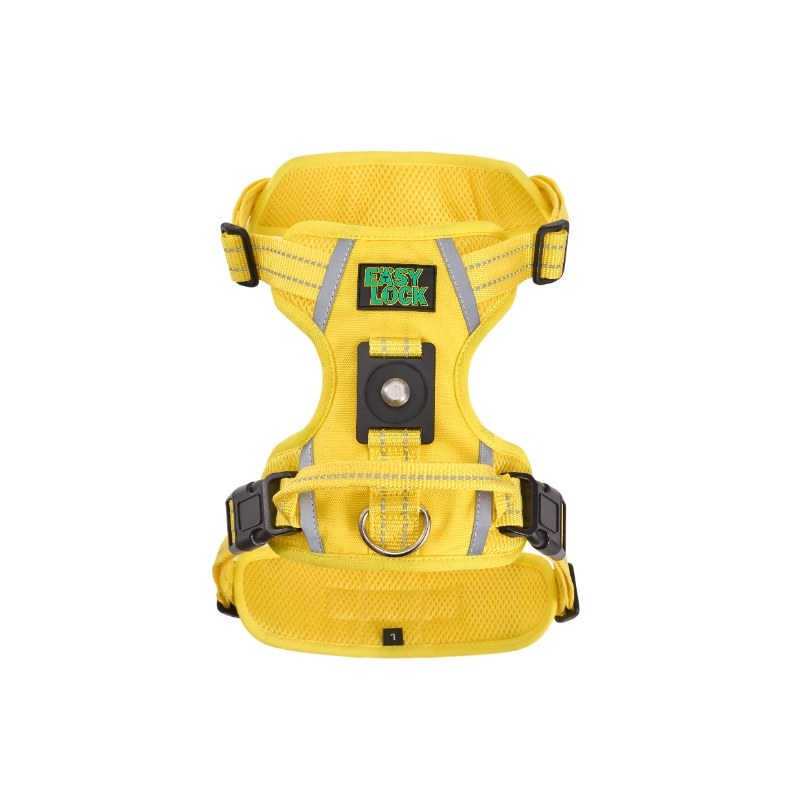
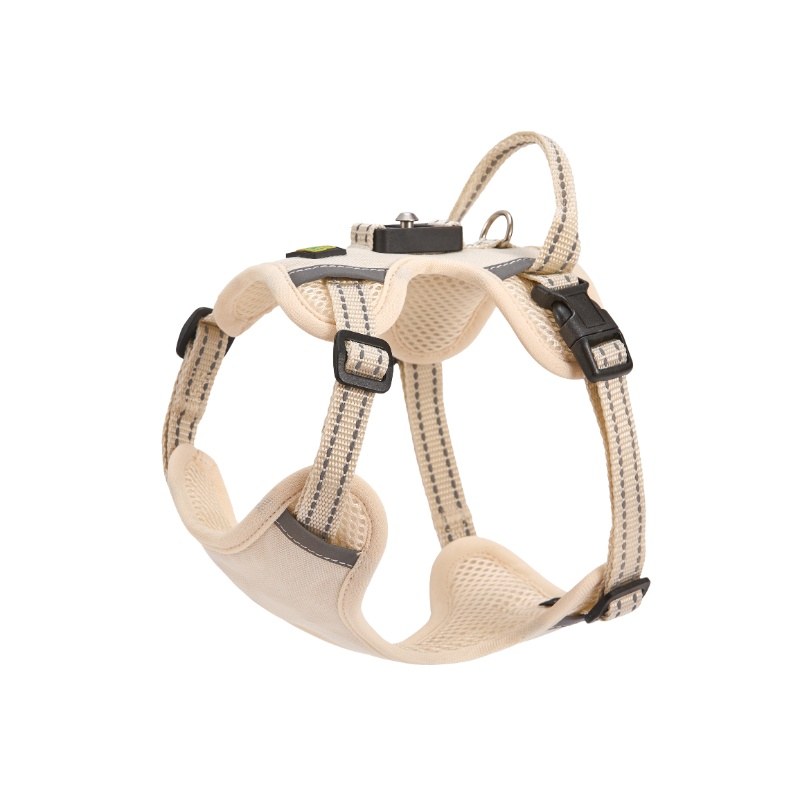
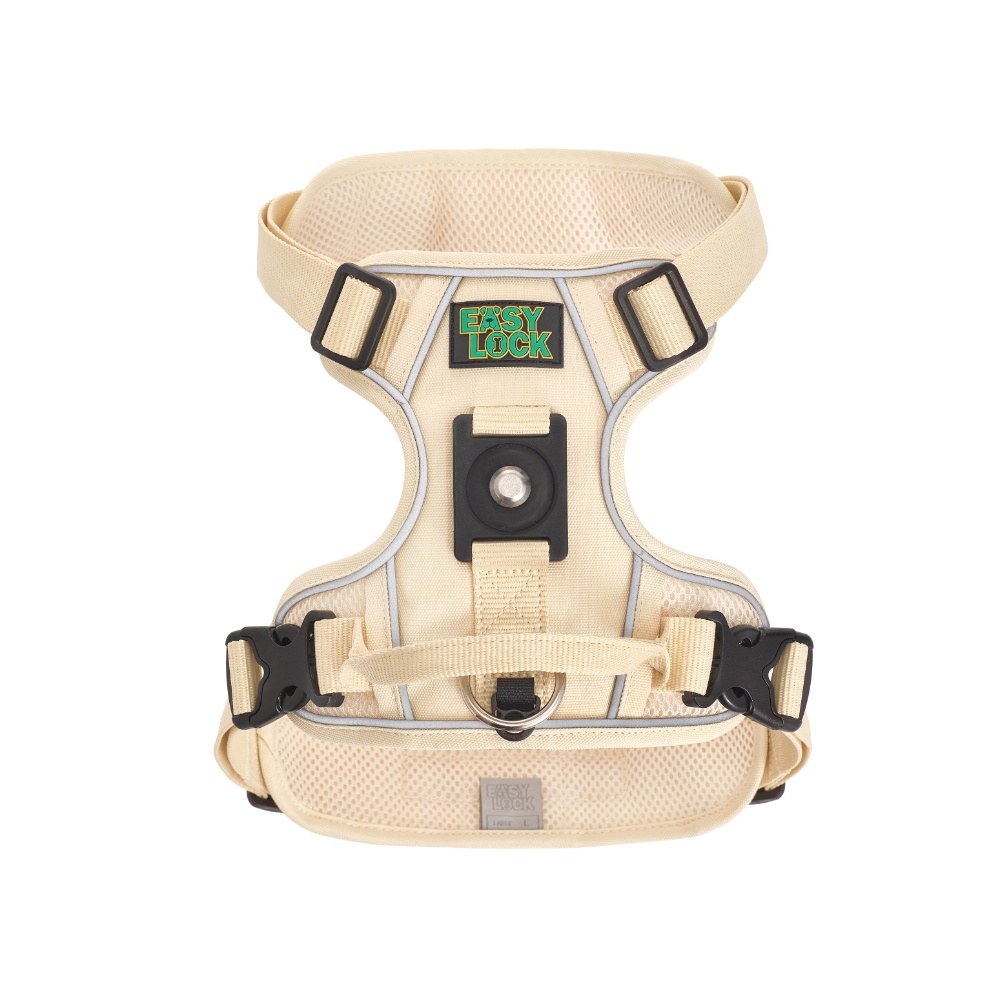
A custom reflective dog harness is decided by three choices: the reflective system, the band layout and the base fabric. Colours, trim and hardware finish are configuration that comes after. Answer the visibility question first and the palette becomes easy.
Custom reflective dog harness development starts with the use case, not the colour card, because a commuting harness and a rural trail harness need different reflective systems and different layouts. The brief that works specifies where the dog walks, how often the product is washed, and what the reflective element is expected to do. Everything else, including material grade, band count and price tier, follows from those three answers.
This article covers what can be customized without disturbing a validated design, how to choose a reflective system by use case, how layout turns a silhouette into something a driver reads as a dog, how base colour affects the result, and which OEM route fits which stage of a brand. It closes with the values worth recording at approval, because a reflective claim is only as good as the numbers behind it.
What Can Be Customized on a Reflective Dog Harness
Customization options fall into three groups according to how much they disturb the validated design, and sorting a brief this way keeps a timeline honest. The first group needs no re-testing: reflective band width within the existing pattern, base webbing colour, hardware finish, thread colour, labels and packaging, plus band count where the pattern already allows multiple placements.
The second group needs fit validation: adding a reflective panel where none existed, moving a band across a seam, or changing base fabric weight, each of which alters thickness or stiffness at a specific zone. The third group is new development — changing reflective technology entirely, or building reflection into a structural strap — and those are process changes rather than trim swaps. Naming the group before quoting is what stops a configured brief from being priced as a development programme, or the reverse.
Choosing the Reflective System by Use Case
Material selection should be driven by the environment the dog walks in rather than by the highest available brightness figure. Urban evening walks need angular coverage at short range, which multiple narrow bands on chest and girth deliver. Unlit rural roads need return at distance, which points to higher-efficiency material concentrated at the rear and sides.
| Use case | Priority | Approach |
|---|---|---|
| Urban evening walks | Angular coverage at short range | Multiple narrow bands on chest and girth |
| Unlit rural roads | Long-distance return | Higher-efficiency material at rear and sides |
| Wet and muddy conditions | Contamination resistance | Woven-in yarn, easy-clean surface |
| Frequent machine washing | Attachment durability | Stitched border or woven-in, never bonded film |
Optimising for peak brightness is the common error. Even coverage across several angles serves a walking product better than one intense band that disappears when the dog turns, because the dog is only facing the driver for a fraction of the approach.
Layout: Designing Visibility Into the Silhouette
Placement matters as much as material, and it is where a custom programme can genuinely beat a stock product. Cover the extremes of the silhouette first, because a driver perceives the widest points before anything else: reflection at chest and hindquarters reads as a dog, while a band across the middle reads as an object. Then place bands at different heights, since two narrow bands produce return across a wider range of approach angles than one wide band and survive posture changes.
Keep the element out of high-flex zones, because a band crossing the shoulder turn or the girth crease will crack or abrade long before the rest of the harness shows wear. A practical layout check is to put the sample on a mannequin in a dark room and walk a torch around it at eye height, noting where the return disappears. That maps angular coverage better than a straight-on photograph with flash, which flatters every design.
Base Colour Decisions That Affect Reflection
Base colour changes perceived visibility even when the reflective element is unchanged. A dark base creates high daylight contrast and makes the nighttime return read sharper, while a light base looks cleaner in daylight but reduces contrast and can let ambient scatter compete with the reflective return at night. There is a production constraint as well: deep-dyed dark colours are harder to hold consistent across lots, and trim stitched onto a dark base shows needle marks more readily.
The relevant evidence is colourfastness to AATCC 61 or ISO 105 tested on the combination rather than on the base fabric alone. A base that bleeds onto the reflective surface during washing dulls the very element the product is sold on, and the failure appears as a grey haze rather than as a visible dye transfer. Approve colour and reflection together, under daylight and under torch light, because a palette approved only in daylight can look flat at night.
OEM Options and Where Each One Sits
Four OEM routes exist, and the right one depends on the stage of the brand rather than on ambition. Private label on an existing reflective pattern is the fastest route and suits a first reflective SKU: choose the palette, apply branding, validate in market. Configured OEM keeps the pattern and changes base colour, trim width, hardware finish, label and packaging, which is where most established brands operate.
Modified OEM changes geometry — an extra band, a wider panel, a different closure — and becomes a development project with fitting rounds and re-testing. Full ODM starts from a market brief rather than a pattern, which is the right route when the concept itself is new and the longest by definition. Whichever route applies, settle pattern ownership and exclusivity in writing at the start, because adding those terms after a pattern enters a factory library is difficult and expensive.
Validation: One Extra Step Beyond a Standard Program
A reflective programme needs post-wash retroreflection testing on the assembled product, which is the step most often skipped and the one that predicts field complaints. The sequence is straightforward: prototype in final materials, fit check at both adjustment extremes, pull test at anchors, wash cycles to the care instruction, then compare reflection before and after.
Validate the packaging claim at the same time. If the hangtag says high visibility, the product has to support that in the conditions the buyer will actually use it, not only in the photograph on the front of the pack. A claim that outruns the test data becomes a returns problem with a marketing cause.
Approving a Custom Reflective Dog Harness: Four Values to Record
A custom reflective dog harness should be approved against four recorded values: reflective reading at two angles, band position in millimetres, assembled weight, and slider or actuation behaviour after washing. Band position is the value most often left out of approval documents and the one that drifts first in production, so record distance from the seam rather than from the strap end. Assembled weight matters on small sizes, where added trim and a larger housing can shift the balance enough to change how the harness sits on a toy breed.
Folding and packing create a risk that appearance inspection never catches: a reflective band creased along the same line in every unit can develop a permanent set, and the crease scatters light even though the surface looks intact. Specify the fold line so it does not cross a reflective band, or add a tissue interleaf, because this is a low-cost fix at packing and an expensive one after the goods reach a warehouse. Put all four values on the approval sheet beside the sample photograph, since a photograph documents appearance while these values document the product.
The EASY LOCK Position
EASY LOCK was founded in 2018 on more than 15 years of webbing manufacturing experience, and reflective elements can be integrated at the weaving stage rather than applied afterwards. That opens options a tape applicator cannot offer: yarn-based reflection with no interface to delaminate, and tighter control of band placement. Our harness platform comes from a three-year development cycle with more than 100 rounds of material testing and is protected by national patents including the Mag-Clip single-touch release, with OEM and ODM programmes running across sizes XS to XL on consistent hardware.
Construction references are on the dog harness collection page, and coordinated palettes are illustrated by the Pastel Collection. Both are worth checking before a palette is agreed, since band placement changes what a colour reads like at night.
Frequently Asked Questions
Q1: Can reflective trim be added without changing the pattern?
Usually yes, if the pattern has a straight run where trim sits without crossing a flex zone. It becomes a pattern change when trim must follow a curve or cross a seam.
Q2: Is woven-in reflective yarn as visible as tape?
Peak reflection is lower, while angular consistency and durability are better because there is no adhesive interface. For frequently washed products the trade is usually worth taking.
Q3: Which base colours work best with reflective trim?
Dark and mid-tone bases give the strongest contrast and sharpest nighttime return. Review candidates as production samples under both daylight and torch light.
Q4: How should the reflective claim be worded?
Describe the feature and its purpose. Avoid absolute safety claims, because reflective trim improves visibility but does not make a dog visible in every condition.
Final Thoughts
A custom reflective dog harness is a visibility programme rather than a trim upgrade. Define the use case, select the system, lay out the bands around the silhouette and the flex zones, then validate after washing before anyone writes a claim on a hangtag. Use cases that change the brief are covered in our application notes, and the sequence above is what makes a custom reflective dog harness predictable rather than experimental.
Design the Visibility, Then the Colour
Send us your use case and palette direction. We will propose a reflective system, a band layout and a validation plan for your market.
Request a Reflective Layout Proposal