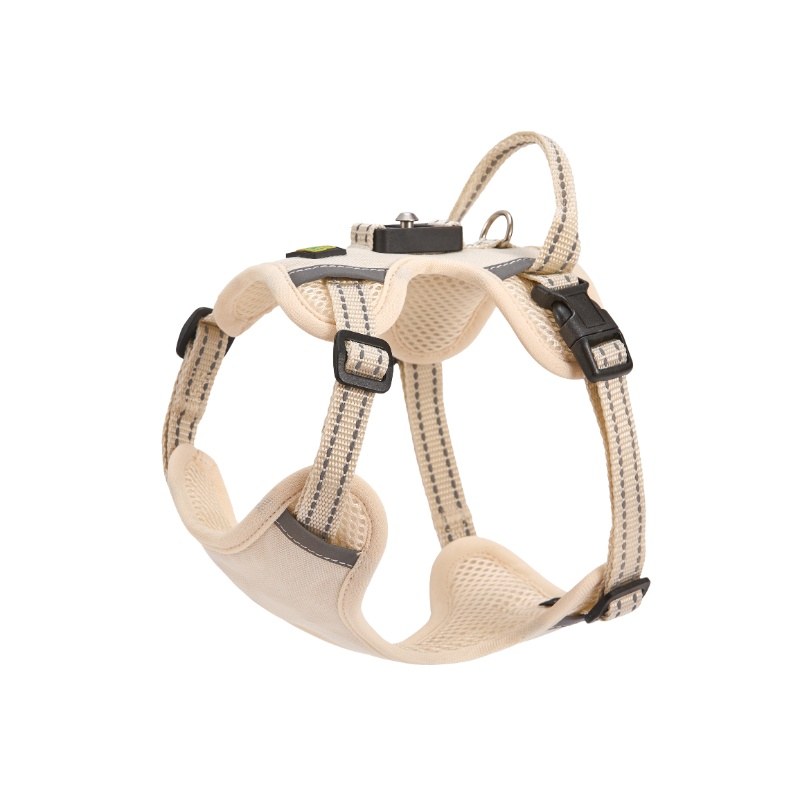
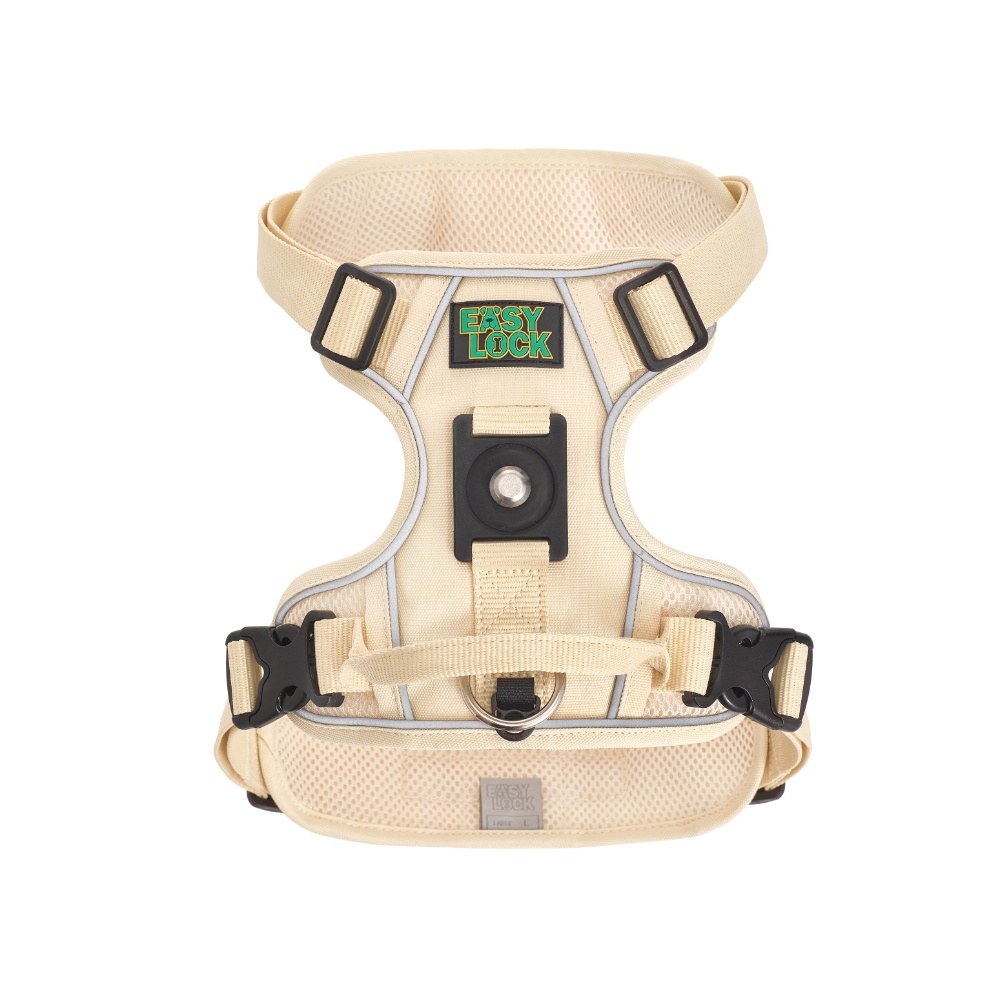
Quick Release Dog Harness Manufacturer: Key Factors for Choosing a Supplier
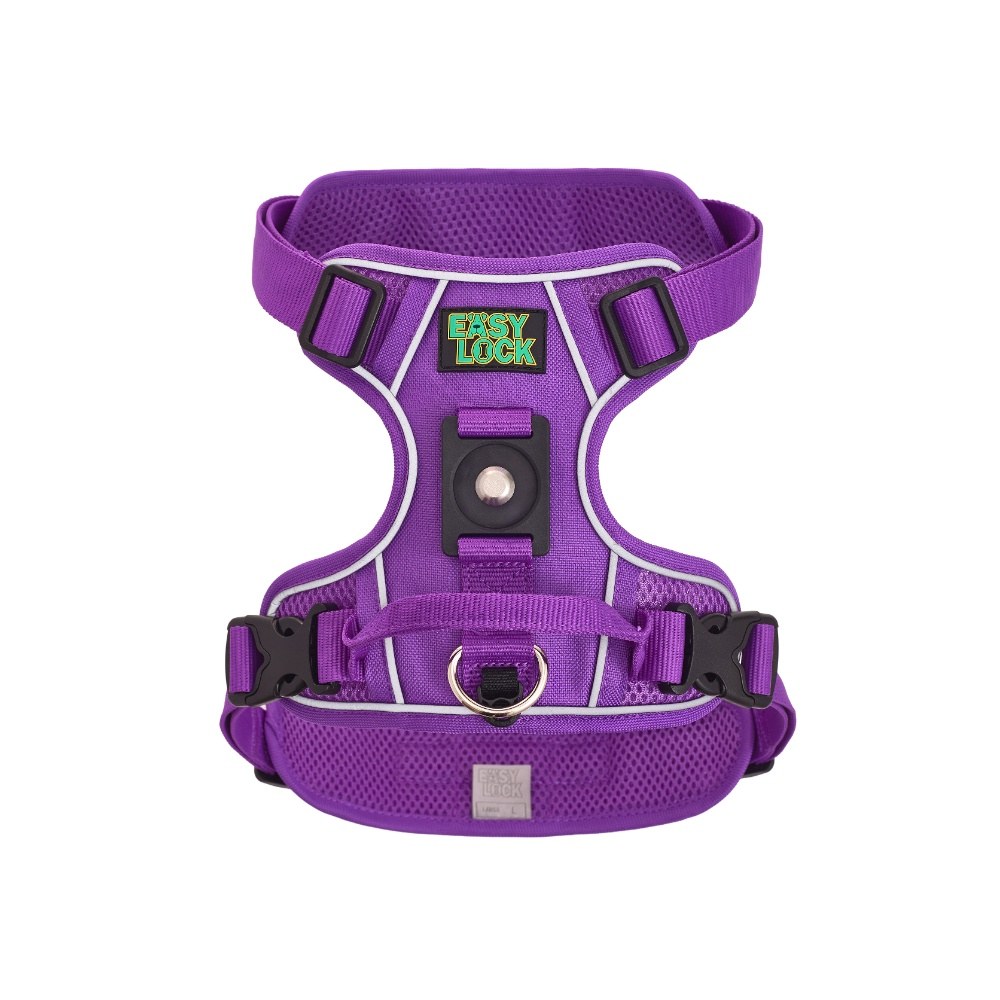
A quick release dog harness manufacturer has to prove two opposite behaviours on one mechanism: it never opens under load it should hold, and it always opens under deliberate actuation. Ask for pull data and loaded-actuation data on the same closure, then ask what happens when it is dirty, wet or cold.
Choosing a quick release dog harness manufacturer means evaluating a closure rather than a harness, because the strap, stitching and padding are conventional while the mechanism is where safety is decided. Most suppliers buy that mechanism rather than building it, which limits both what they can change and what they can prove. That distinction should shape the entire evaluation, from the first question to the last document.
The sections below examine the engineering question behind every quick release, the two failure modes that actually injure dogs, the four closure families and their risk profiles, the three places manufacturing discipline becomes visible, and how actuation force is held stable in production. It closes with the traceability request that most buyers omit and later regret.
The Engineering Question Behind Every Quick Release
A quick release closure has a retention path and an actuation path: retention carries load through mechanical engagement, while actuation converts a finger movement into disengagement. Good design keeps those paths independent, so load on the strap never presses against the release and the release never has to overcome load to function. Designs that share geometry between the two paths create a specific hazard, because the closure becomes easier to open when the dog pulls, which is the precise opposite of what safety requires.
Another failure pattern is a latch that needs tension relieved before it will open, which defeats the purpose of a quick release in the situation it exists for: a dog tangled, a leash caught, an owner needing immediate separation. So the first question is not how strong the closure is, but whether release force stays independent of strap load. That can be demonstrated with two tests rather than asserted in a brochure.
Two Failure Modes That Matter
Unintended release happens during a lunge, a roll, a snag, or contact between a paw and the actuator, and it is the failure that produces injury and recall-level complaints. Failure to release happens when the actuator jams or requires more force than an owner can apply, with sand, mud, ice and internal corrosion as the usual causes. Both worsen with contamination, which is why a bench test on a clean sample proves very little.
| Test | What it proves | What to request |
|---|---|---|
| Static pull | Retention under steady load | Peak value and sample size |
| Loaded actuation | Release force under tension | Force curve, not pass or fail |
| Cycle life | Drift in both functions | Cycle count to defined drift |
| Contamination | Function after sand, mud, salt | Procedure and post-test result |
| Cold exposure | Actuation force at low temperature | Temperature and measured force |
Our own architecture pairs a magnetic alignment stage with a mechanical stainless steel latch. The magnet handles positioning and the latch handles retention, so the two functions are structurally separate rather than sharing one interface. That separation is what allows release force to stay flat as load rises.
Closure Architecture: What You Are Actually Buying
Four families dominate, and each carries a different risk profile. Plastic side-release buckles are the default: cheap, understood and widely tooled, but they require two hands, precise alignment and enough grip to overcome the spring, and they pinch. Metal quick-release buckles offer better retention and a premium feel at higher weight and cost, with corrosion resistance depending entirely on substrate, which is why AISI 304 or 316 matters and plated zinc alloy does not qualify.
Magnetic-assisted closures use magnets for alignment and a mechanical latch for retention. The user experience advantage is real, but only if the latch is genuinely independent of the magnets. Buckle-free designs remove the mechanism entirely and shift all risk onto fit accuracy, which suits specific formats but leaves no adjustment margin when the dog changes shape or coat.
Where Manufacturing Discipline Shows
Once architecture is settled, supplier quality shows up in three unglamorous places. Tolerance on the mating halves comes first, because a closure works within a narrow band of clearance: too tight jams in cold or dirt, too loose rattles, wears and eventually fails to seat. Ask for the interface tolerance and how it is inspected, since a number without a method is a claim.
Spring and actuator material is the second, because the spring is the part nobody specifies and the part that decides cycle life. Stainless spring wire behaves differently from coated carbon steel once moisture enters the housing. Assembly consistency is the third: a closure seated by hand with variable force produces variable actuation feel, and fixtured seating plus per-batch actuation sampling is the difference between unit one and unit ten thousand.
How a Quick Release Dog Harness Manufacturer Controls Actuation Force
A quick release dog harness manufacturer controls actuation force through three variables: latch engagement depth, spring preload, and the mechanical advantage between actuator and latch. Engagement depth sets how far the latch shoulder sits behind its seat, so deeper engagement holds better under shock load but requires more travel to release. Spring preload sets the rest position of the latch, where higher preload resists accidental movement and lower preload reduces press effort, in a workable band narrow enough that it should be specified as a value with a tolerance.
Mechanical advantage is set by actuator geometry: a longer actuator arm reduces required finger force without changing the latch itself, which is why actuator design is often the cheapest way to improve accessibility. The control that keeps all three stable in production is per-batch actuation sampling on a fixture rather than operator feel, because finger judgment varies between shifts and a measured force does not. Housing material matters most in cold conditions, since polyamide retains impact strength at low temperature better than styrenic plastics that can become brittle and crack at the latch seat after a drop on frozen ground.
Ask for the housing polymer and impact data at the lowest temperature the market expects, and test the strap alongside the mechanism, because webbing stiffens in cold and changes how the closure seats. Fixtures and gauges separate a capable process from a hopeful one: a seating fixture controls press depth and angle, while a go/no-go gauge confirms mating clearance without a laboratory. A factory with a fixture but no calibration record is controlling the operation without controlling the measurement.
Documents and Traceability
Expect REACH SVHC and RoHS declarations for Europe, Prop 65 for California and ASTM B117 salt-spray data on metal components. For textile parts, OEKO-TEX Standard 100, AATCC 61 or ISO 105 and ASTM D4966 cover the usual requirements.
What buyers rarely request, and should, is closure traceability. Each production lot should link to the hardware batch used, so a mechanism issue six months later can be traced to specific shipments. Without lot linkage, a complaint about one unit becomes a complaint about the whole programme, and the only available response is replacement rather than correction.
The EASY LOCK Position
EASY LOCK was founded in 2018 on more than 15 years of webbing manufacturing experience and supplies OEM and ODM programmes to customers in 15 countries. The closure platform is the fifth-generation EASYLOCK magnetic system: a stainless steel quick-connect with a mechanical latch, pull-tested to 190kg+, with the single-touch release covered by our patented Mag-Clip technology.
The release is deliberately actuated rather than tension-dependent. Magnets align the halves so the owner does not have to aim, the latch carries load, and a recessed actuator requires a deliberate press while resisting accidental contact. The mechanism comes from a three-year development cycle with more than 100 rounds of material testing, which is where contamination and cycle behaviour were resolved; technical detail is on our closure technology page.
Frequently Asked Questions
Q1: Is a quick release harness safe for a dog that lunges?
It can be, when retention is independent of release and the mechanism is pull-tested above what the dog can generate. Confirm that release does not become easier under tension.
Q2: How many cycles should a closure survive?
Set the number from expected daily use over the product's intended life, then require testing to it with a stated drift limit. A cycle count without a drift criterion is incomplete.
Q3: Does a magnetic closure count as a quick release?
Only with a mechanical latch and a deliberate actuator. A pure magnet-to-magnet closure is quick to close but not reliably secure under load.
Q4: What should be checked on the first lot?
Sample actuation force across the lot, confirm lot-to-batch traceability, run a contamination test on a few units, and compare seating feel against the golden sample. Those four checks catch most of what goes wrong between approval and mass production, and they can be run with a force gauge and a bag of sand in under an hour.
Final Thoughts
A quick release dog harness manufacturer is really a closure manufacturer, and the closure is where the safety argument lives: two independent behaviours, one mechanism, both tested under load and after contamination. Ask for the loaded-actuation curve and lot traceability before the first order, because neither can be produced retroactively. More on closure testing is in our industry notes, and that evidence is what separates a quick release dog harness manufacturer from an assembler of somebody else's buckle.
Test the Release, Not Just the Pull
Send us your load requirements and use environment. We will share the closure test protocol, actuation data and configuration options.
Review the Closure Test Protocol