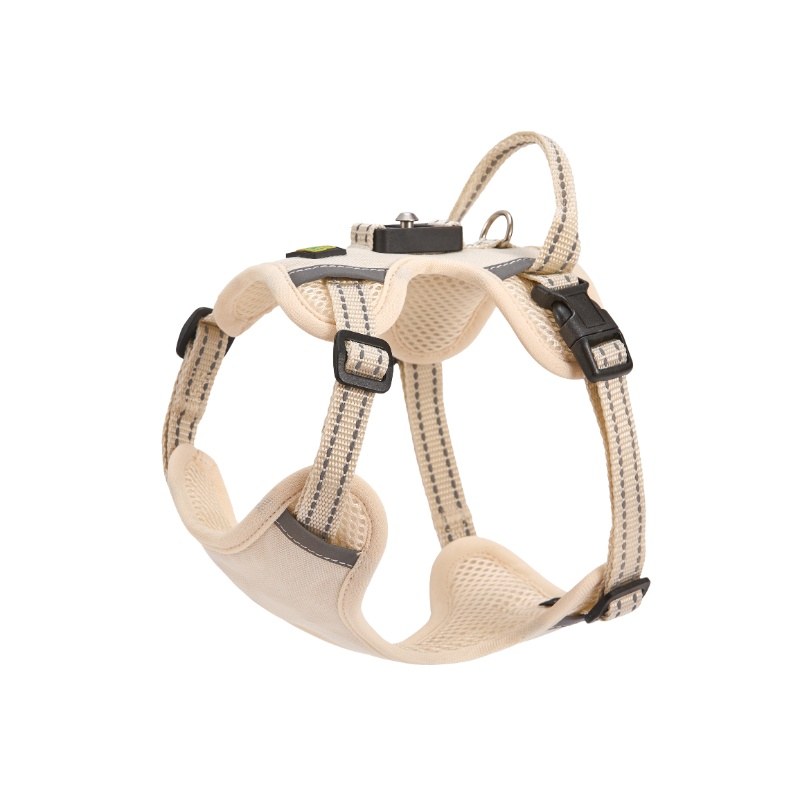
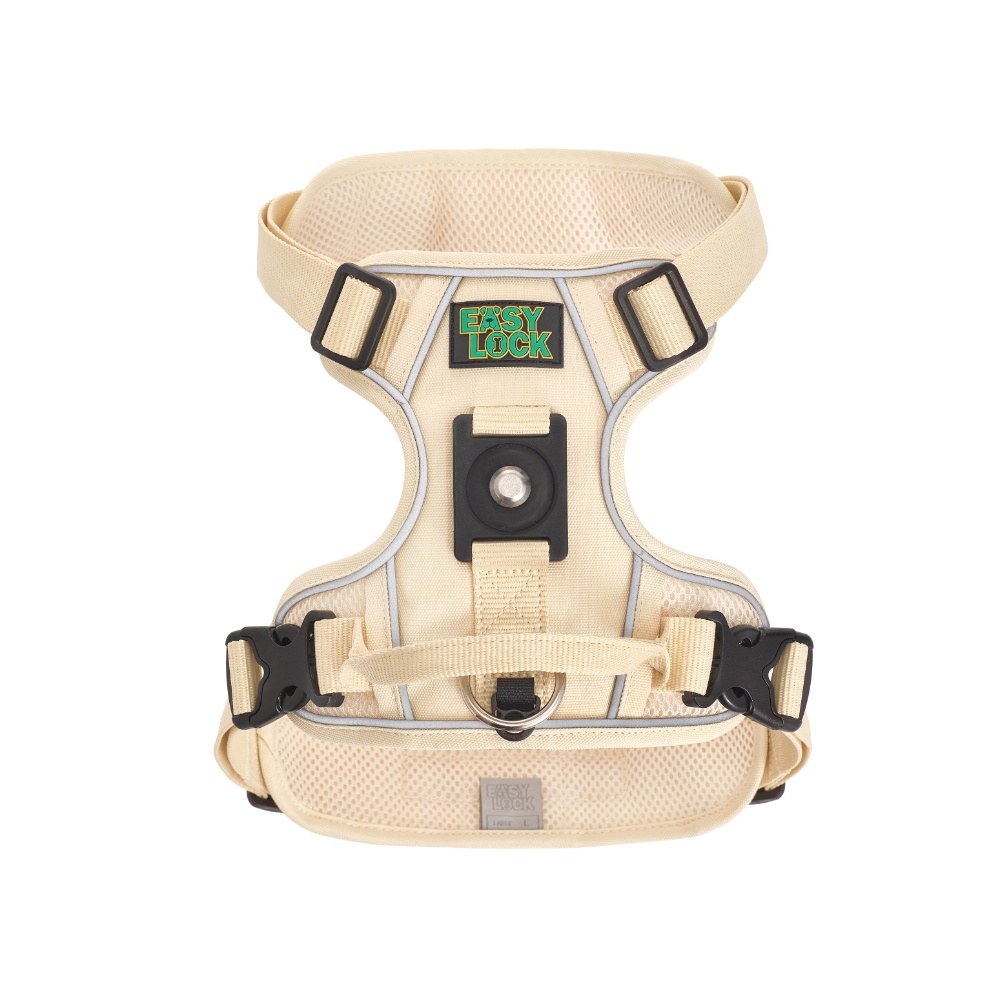
Quick Release Dog Harness Design: Balancing Safety, Convenience, and Comfort
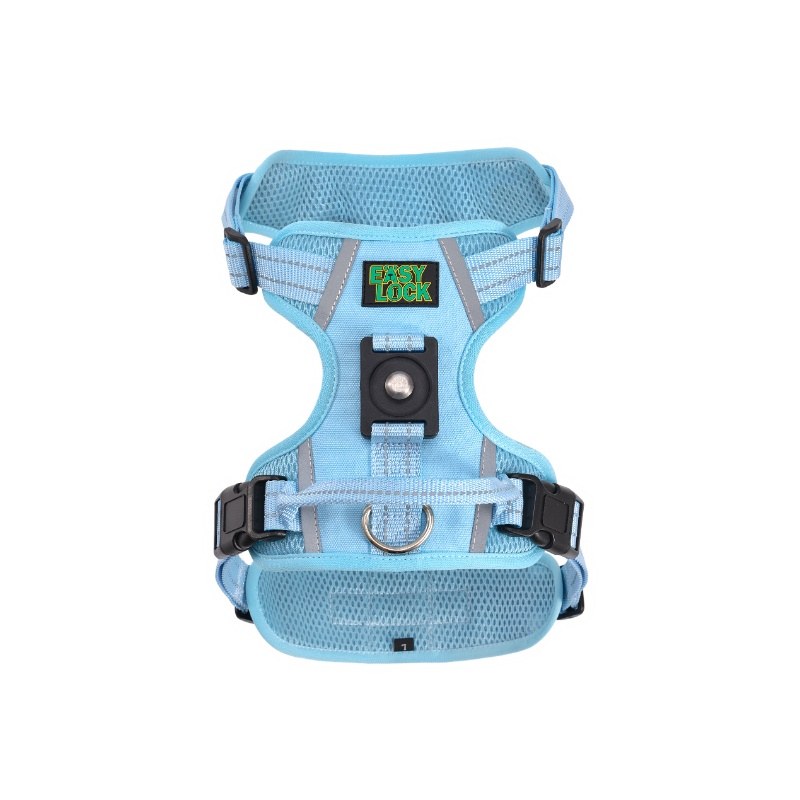
Quick release dog harness design is a three-way trade between safety, convenience and comfort, and the trade is settled by actuation force, load-path independence and where the housing sits on the chest. Get those three right and the rest of the product follows.
Quick release dog harness design balances three requirements that actively conflict: the closure must hold under load, open with minimal effort, and add nothing uncomfortable against the dog's chest. Each requirement pushes the design in a different direction — safety wants more retention, convenience wants lighter actuation, comfort wants a smaller housing — and the engineering work is resolving that triangle rather than maximising any one corner. Products that maximise one corner usually fail in the field on another.
The sections below take the conflict in order: where the three requirements collide, how actuation is specified in force, travel and feedback, how retention keeps load away from the release, the convenience details that decide daily use, and what a closure does to comfort and to housing size. It closes with the five checks worth running before a pattern is released, and with the reason the platform is sized by latch volume rather than by styling.
Where the Three Requirements Conflict
Safety and convenience conflict directly at the actuator. A release that is easy to press is also easier to trigger accidentally, while a release that resists accidental contact is harder for a weak hand to operate. The resolution is not a compromise force value but a separation of the actuation path from the load path, so that deliberate press force can stay low while unintended-release resistance stays high.
Comfort conflicts with both, because retention hardware has mass and volume. A larger latch is stronger and easier to grip, and it is also heavier and more likely to press against the sternum. Design therefore moves the housing off the highest-pressure point rather than shrinking it below the strength requirement, which is the only option that satisfies both.
Actuation Design: Force, Travel and Feedback
Three parameters define how a release feels, and all three can be specified independently of retention strength. Force is the press effort required, and it should sit within a band that a weak hand manages comfortably while a paw or a branch cannot exceed it by accident. Travel is the distance the actuator moves between rest and release: short travel feels precise but risks accidental triggering, while long travel feels deliberate but slows the action under stress.
Feedback is the audible and tactile confirmation that the closure has seated or released. Without it owners press twice, pull to check and eventually distrust the product, which turns a working closure into a complaint. A recessed actuator set below the housing surface is the standard answer to the force-versus-accident problem, because it requires a directed press rather than incidental contact.
Retention Design: Keeping Load Off the Release
Retention should be carried by mechanical engagement rather than by friction or magnet strength, because friction varies with contamination and magnet strength varies with gap and temperature. The design test is simple: load the closure to its rated pull while measuring actuation force. If the force rises sharply under load, the release is bearing part of the retention duty, and that is a design fault rather than a tolerance issue.
A mechanical latch that engages behind a shoulder decouples the two, since load presses the latch into its seat while release moves it sideways out of engagement. This is also why pure magnet-to-magnet closures should not be used on strong pullers: with no mechanical engagement, retention depends on a force that creeps under sustained load and drops with temperature.
Convenience Details That Decide Daily Use
Daily usability is settled by details that never appear on a specification sheet, and four of them matter most. Self-alignment comes first: the halves should find each other within a few centimetres of approach, so the owner does not have to aim while holding a leash and a moving dog. One-hand operation follows, because the closure must seat and release with one hand while the other holds the lead, and any design requiring two hands fails in real walking conditions.
Strap channel clearance is the third detail: the webbing must pass through the housing without binding, or the closure rotates out of position as the dog moves. Glove compatibility is the fourth, and in cold markets an actuator that demands bare-skin precision becomes a seasonal complaint rather than a design note. A raised contact pad solves it at almost no cost.
Comfort: What the Closure Does to the Harness
A closure changes the harness in three ways: it adds mass at a specific point, it stiffens the strap end, and it creates a hard surface against the chest. Mass matters most on small breeds, where a housing that is trivial on a Labrador is significant on a Chihuahua, and the same platform can therefore be inappropriate at the small end of a size range. Stiffening matters at the strap termination, because a stiffened end will not drape, so it stands away from the body and can catch on the opposite leg mid-stride.
Hard surfaces matter mainly by location. Moving the housing laterally off the sternum reduces pressure more effectively than adding padding over it, and the general rule is that the closure should sit where the harness is already stiff — near a seam or a reinforced panel — rather than in the softest part of the chest contact zone. Padding placed over a badly located housing changes the shape of the problem without solving it.
Sizing the Housing in Quick Release Dog Harness Design
Housing size in quick release dog harness design is set by latch volume rather than by visual preference. Shrinking the shell below the volume the latch needs reduces engagement depth or forces a smaller mechanism with a lower load class, and the minimum internal volume is simply the sum of latch travel, spring space and wall thickness at the load-bearing faces. Those three are fixed by the load requirement before any styling decision is made.
Mass then becomes the constraint at the small end of the range, where a housing that is negligible on a large dog can represent a meaningful share of body weight on a toy breed. Review the mass ratio at the smallest size before approving a platform for a full range; if the ratio is unacceptable, the options are a smaller mechanism with a lower load class or restricting the platform to larger sizes. Neither is a styling compromise, because both are engineering answers to a geometry problem that appearance cannot solve.
Glove use belongs in the same conversation as housing size, since it is a design constraint rather than an afterthought. A raised contact pad with a defined edge gives a gloved thumb something to locate, and feedback matters as much as force because a gloved hand cannot feel a shallow detent. Audible and tactile feedback should therefore be specified as a requirement rather than left to emerge from the mechanism: a closure that seats silently invites a second press and a visual check on every walk. Feedback also serves as a diagnostic, because an owner who knows what a correct click feels like will report a change early, before a partial engagement becomes a failure.
Design Validation Matrix
Five checks cover the design risk before a pattern is released, and each maps to one corner of the triangle. Run them on an assembled harness rather than a bare mechanism, because strap tension changes the result.
| Check | Requirement tested | Pass condition |
|---|---|---|
| Loaded actuation | Safety and convenience | Force stays within band at rated load |
| Accidental contact | Safety | No release from paw or brush contact |
| One-hand donning | Convenience | Seats while the other hand holds a leash |
| Gait observation | Comfort | No altered stride, no housing drag |
| Contamination cycle | Durability | Function unchanged after sand and salt |
The EASY LOCK Position
EASY LOCK was founded in 2018 on more than 15 years of webbing manufacturing experience, and the fifth-generation EASYLOCK magnetic system was developed over three years with more than 100 rounds of material testing. It is protected by national patents including the Mag-Clip single-touch release. The architecture separates the triangle deliberately: magnets provide self-alignment for convenience, a stainless steel latch carries retention for safety, and a recessed actuator with tactile feedback resolves the force conflict.
Pull testing is rated at 190kg+, and sizes run XS to XL with consistent hardware. Construction references are on the dog harness collection page, and the mechanism itself is described on our closure technology page.
Frequently Asked Questions
Q1: Can a release be both easy and secure?
Yes, when the actuation path is independent of the load path. Low deliberate press force and high accidental-release resistance are compatible if the latch carries load and the actuator only moves the latch.
Q2: Is a heavier closure always stronger?
No. Strength comes from latch geometry and material grade rather than mass. A well-designed stainless latch can outperform a heavier plated component while adding less weight to the chest.
Q3: Where should the housing sit for comfort?
Off the sternum and near an existing stiffened area such as a seam or reinforced panel. Moving it laterally reduces pressure more effectively than adding padding.
Q4: Does the closure work with gloves?
It depends on the actuator surface. A raised contact pad allows a gloved press while a flush button does not. This is worth specifying for cold-climate markets.
Final Thoughts
Quick release dog harness design succeeds when the three requirements are separated rather than averaged: magnets for alignment where used, a latch for retention, a recessed actuator for deliberate release. Averaging produces a closure that is slightly unsafe, slightly awkward and slightly heavy, which is the profile that generates returns without generating complaints clear enough to fix. More on how leash attachment changes the load path is in our application notes, and the three-way trade above is what a quick release dog harness design has to settle before tooling.
Review the Three-Way Trade
Send your design brief and target dog sizes. We will show where the closure geometry needs to change before a sample is cut.
Book a Closure Design Review