Custom Quick Release Dog Harness: Buckle Options, Materials, and OEM Services
A custom quick release dog harness gives you four levers: closure platform, webbing, hardware finish and visual programme. Three move without tooling. The fourth is an engineering programme with its own test cycle. Deciding which one you actually need is the whole brief.
Customizing a quick release dog harness is mostly a question of how much of the closure you intend to own. Configure the strap and the finish and you own a product; change the mechanism and you own a development project. Most brands get the best return by moving the configurable levers decisively and leaving the mechanism alone until volume justifies it, which also keeps the launch date realistic.
The sections that follow map the four configurable levers, compare the four closure platforms on cost and constraint, explain what fast-cycle closures demand of webbing, set out the OEM tiers with what each unlocks, and describe the four stages of prototyping a new mechanism. It closes with the tooling and order structure that keeps a custom programme from becoming a one-season experiment.
What Can Be Customized Without New Tooling
Four categories move without touching the closure tool, and together they account for most of the visible differentiation a customer notices at shelf. Webbing construction and colour come first: width, weave density, edge finish and dye can all change provided the width stays compatible with the closure's strap channel. Hardware finish comes second, covering housing colour, plating tone and surface texture on both the closure and the D-ring, where matte, gloss, anodized and painted treatments read very differently in a product photograph.
Trim and detailing are the third category: reflective banding, contrast stitching, piping, label placement and D-ring style, all achievable within existing seam lines. Packaging and branding are the fourth, and they are the cheapest differentiation per unit as well as the one most often left until the last week. A brand that treats packaging as an afterthought hands back the easiest margin it had.
Buckle Options: A Selection Matrix
Past finish, the closure platform determines cost, weight, user experience and testing scope, and four formats cover most of the market. Plastic side-release buckles suit volume programmes and light to medium dogs, with two-hand use and spring wear as their constraints. Metal side-release buckles support premium positioning and strong dogs, at the cost of weight and a substrate quality requirement that plated zinc alloy does not meet.
| Platform | Best for | Constraint |
|---|---|---|
| Plastic side-release | Volume programs, light to medium dogs | Two-hand use, pinch risk, spring wear |
| Metal side-release | Premium positioning, strong dogs | Weight, substrate quality, corrosion |
| Magnetic with latch | One-hand use, accessibility, senior owners | Higher unit cost, platform-specific tooling |
| Buckle-free | Step-in and slip-on formats | Depends entirely on fit accuracy |
Two practical notes follow from that matrix. Plastic and metal side-release formats are widely tooled, so customization usually means choosing an existing mould and configuring finish rather than cutting new steel. The magnetic-plus-latch platform is where genuine differentiation lives and also where supplier capability is concentrated: few factories build that mechanism rather than buying it, and a buyer cannot modify what they did not design.
Materials That Work With Fast-Cycle Closures
A closure that opens and closes many times a day places three specific demands on the strap running through it. Dimensional stability comes first, because webbing that stretches or shrinks after washing changes the strap tail length and the seat of the closure, which is why post-wash data matters more than a room-temperature measurement. Edge integrity comes second: the edge contacts the closure channel, and a heat-cut edge that frays or curls will jam that channel over time, while a sealed or folded edge holds its profile.
Surface friction comes third. A friction-dependent retention design needs a strap with grip, whereas a mechanical latch does not and can use a softer, lower-friction webbing for comfort. Specifying webbing before the closure is chosen is how buyers end up with a combination that slips. A pair test resolves it: cycle the closure on the chosen webbing two hundred times, wash three times, cycle again and measure actuation force.
OEM Service Tiers and What Each Unlocks
Custom work is easier to plan when both sides agree which tier the project sits in before sampling begins. Private label uses an existing pattern and closure with your branding, which is fastest to market and relies on packaging and colour for differentiation. Configured OEM keeps the pattern and closure while changing webbing, finish, trim and palette, and it is where most brand programmes should sit because it delivers visible uniqueness without new validation risk.
Modified OEM changes geometry: strap width, panel shape, D-ring placement, adjustment layout. Pattern work and full re-testing apply. New mechanism development means tooling, mechanism validation, cycle testing and contamination testing, and it is justified by volume and a genuine user-experience gap rather than by novelty. Being explicit about the tier prevents the most common scope dispute in OEM work, where a brand briefs a modified project and expects a configured timeline.
Prototyping a New Closure: Four Stages
If the brief genuinely requires a new mechanism, plan four stages and be sceptical of anyone who compresses them. Concept and mechanism study defines the actuation path, retention path and load class, and proves that release force stays usable while the closure is loaded. A functional prototype then uses machined or printed housings with production-intent internals, tested in isolation before integration, because debugging a closure inside a sewn product is unnecessarily slow.
Tooling and the pilot run establish production moulds and dimensional capability, which is where tolerance control becomes visible and where programmes either settle or keep drifting. Validation covers static pull, loaded actuation, cycle life, contamination, cold exposure and a full harness-level fit and load test. Only after that does the mechanism enter a catalogue, and any supplier promising a shorter path is either reusing an existing tool or skipping a stage.
Tooling and Order Structure for a Custom Quick Release Dog Harness
Tooling for a custom quick release dog harness depends on which level of change the brief requires, and the order structure should be built around the same level. A finish-only change needs no tooling, a geometry change needs a mould modification and a new actuation validation, and a new mechanism needs a housing mould, an assembly fixture and a full validation cycle. Programmes that share a tool can be combined across colours in one production run; programmes with separate tools cannot, even when they look identical in a photograph.
Plan the first order around the size curve rather than the colour count. A full size run in two colours validates fit and grading across the market, while five colours in two sizes validates nothing except the palette. Reserve capacity for the second order at the same time as the first, because mechanism production slots are less flexible than sewing slots, and a launch that succeeds without a reorder plan loses the advantage it just created.
Coating durability is the most under-specified customization in this category. A painted housing that looks correct on a sample can wear through at the actuator edge within weeks, exposing a different colour underneath, so ask for abrasion data on the finished coating and for the substrate colour. A housing moulded in the target colour hides wear far better than a painted one, and the difference is visible within a season. Small volumes per shade are limited by the finishing batch rather than by the mould, which is why consolidating the palette usually improves both consistency and delivery.
Golden sample discipline matters more in a custom programme than in a catalogue one. The sealed reference should include the closure in its assembled state, because actuation feel cannot be judged from a loose housing, and the press force should be recorded on the sample card at the time of approval. Six months later that number is the only objective way to tell whether a reorder has drifted. Approval paperwork should record the closure part number, the webbing construction and the finish code together, since a change to any one of the three alters the feel of the product even when the drawing looks identical.
The EASY LOCK Position
EASY LOCK was founded in 2018 on more than 15 years of webbing manufacturing experience and supplies OEM and ODM programmes to customers in 15 countries. Because the closure is built rather than bought, configured customization can extend to housing finish, strap channel configuration and webbing specification. The platform is the fifth-generation EASYLOCK magnetic system: stainless steel quick-connect, one-hand release, 190kg+ pull testing and a patented Mag-Clip single-touch actuator, developed over three years with more than 100 rounds of material testing.
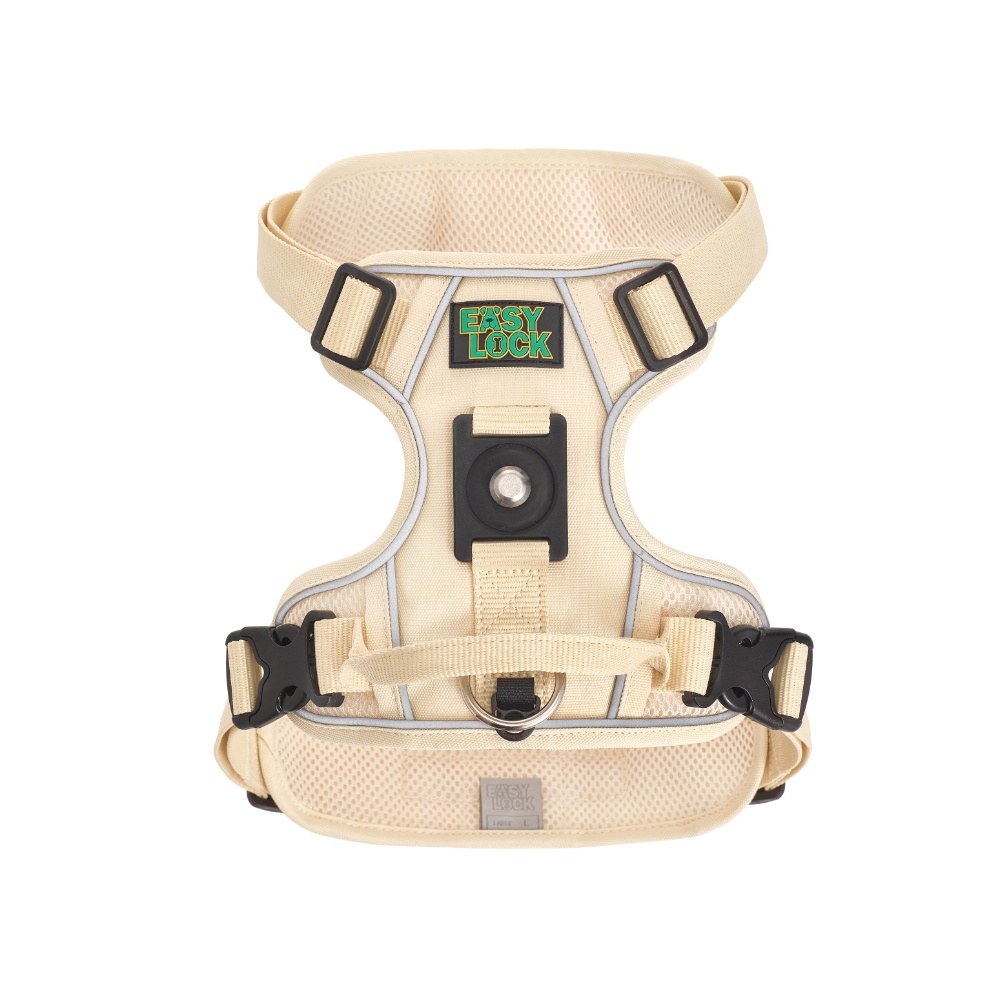
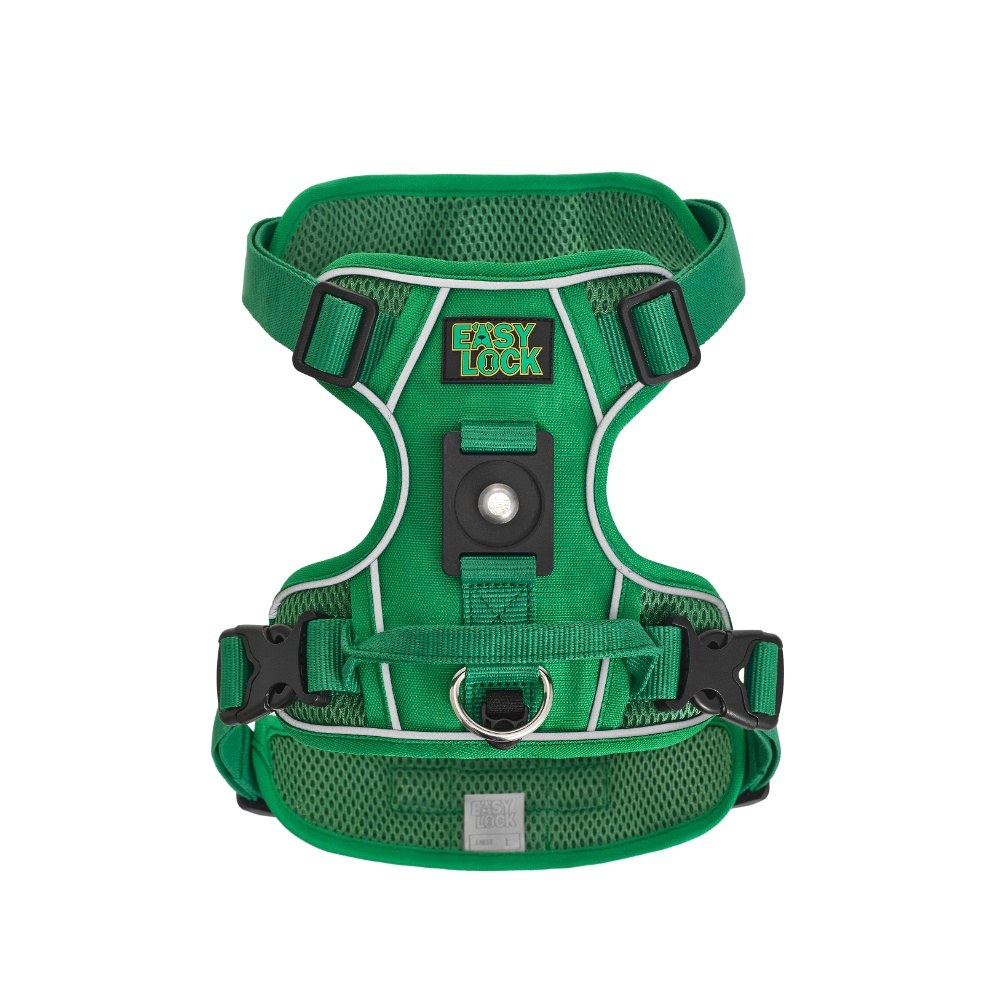
A finished programme is shown in the Vitality Collection, and the mechanism itself is described on our closure technology page. The pair is useful in a brief meeting, because one shows the finish options a buyer can choose and the other shows what sits behind them.
Frequently Asked Questions
Q1: Can the buckle housing be a custom colour?
Yes, within the finishes the platform supports. Housing colour is a production parameter rather than a mechanism change, so it does not reopen validation. Very low quantities per colour may be limited by finishing batch size.
Q2: Is a custom buckle worth it for a first product?
Usually not. A first product benefits more from a proven closure launched quickly than from a new mechanism launched late. Revisit the mechanism when volume supports the tooling and test cycle.
Q3: Can one harness program use two closure types?
Yes, as two SKUs rather than one variant. Each closure needs its own pattern provision, its own validation and its own spare-parts logic. Treating them as one product complicates everything downstream.
Q4: What is the most common customization mistake?
Changing webbing and closure independently without testing the pair. Both components can be individually acceptable and still behave badly together, particularly on slider creep and actuation feel.
Final Thoughts
A custom quick release dog harness is best treated as configuration until volume justifies development. Webbing, finish, trim and packaging deliver most of the differentiation at a fraction of the risk. If a new mechanism is genuinely required, budget the tooling stages and test the pair rather than the parts. More on hardware and webbing interaction is in our industry notes, and that sequence is what keeps a custom quick release dog harness programme on schedule.
Configure First, Tool Later
Send your brief and target volume. We will map it against the configurable options and tell you honestly whether a new mechanism is justified.
Get a Configuration Proposal