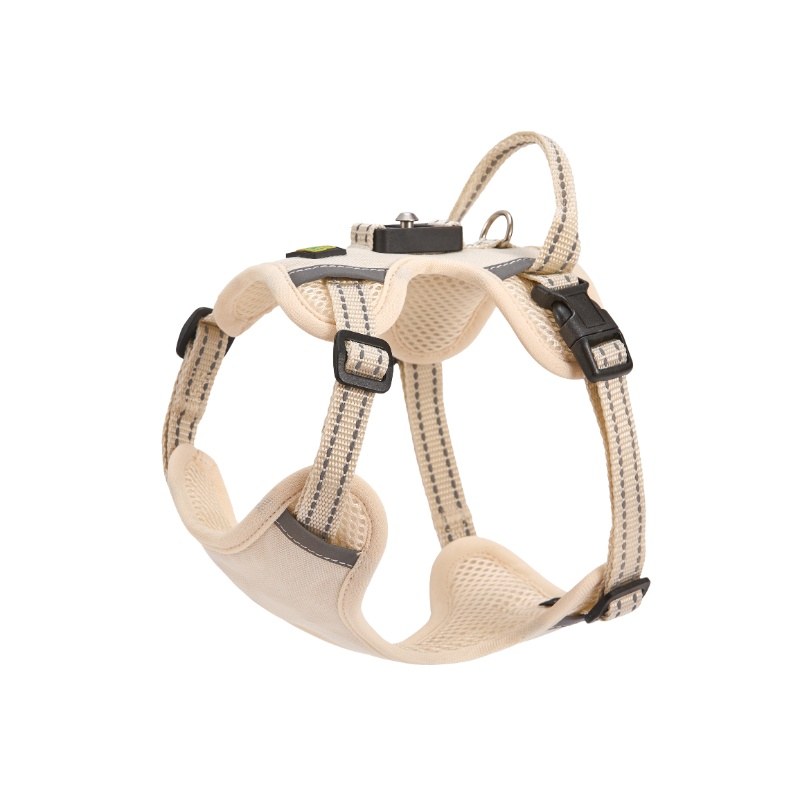
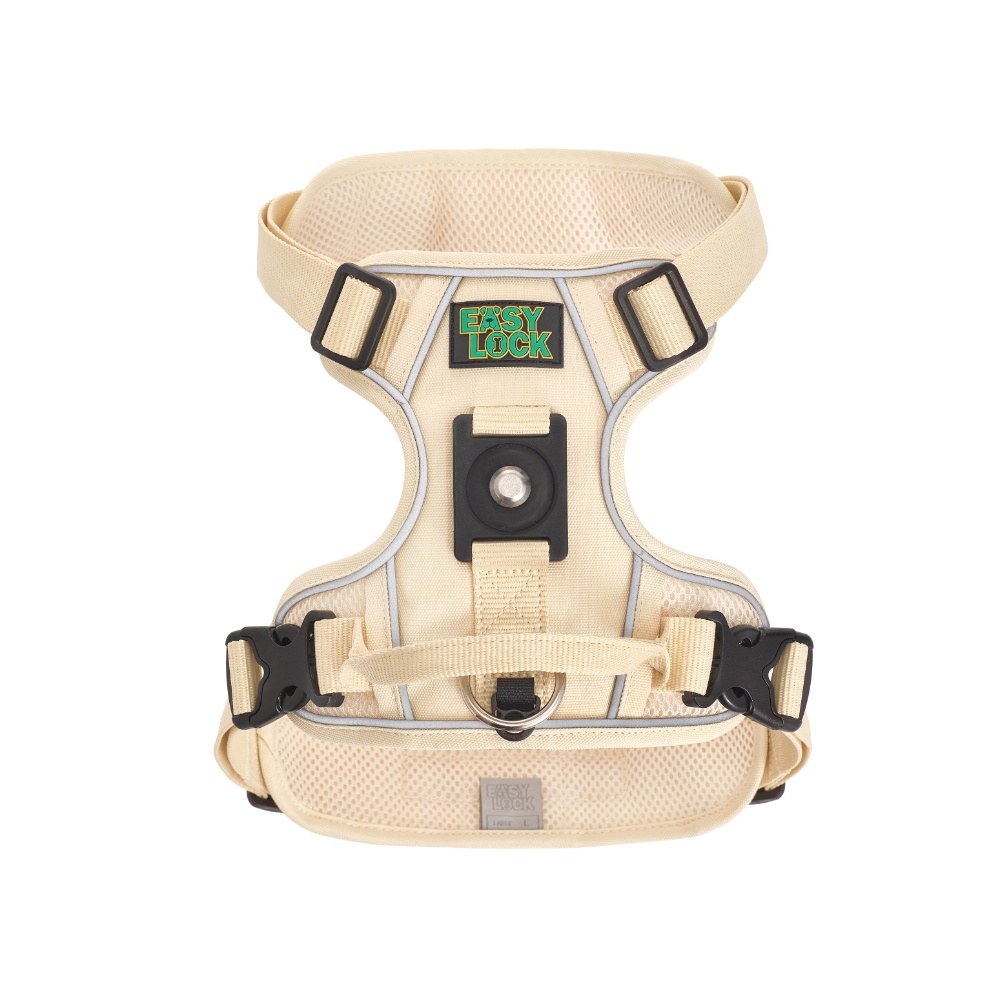
Magnetic Dog Harness Manufacturer: What to Look for in an OEM Factory
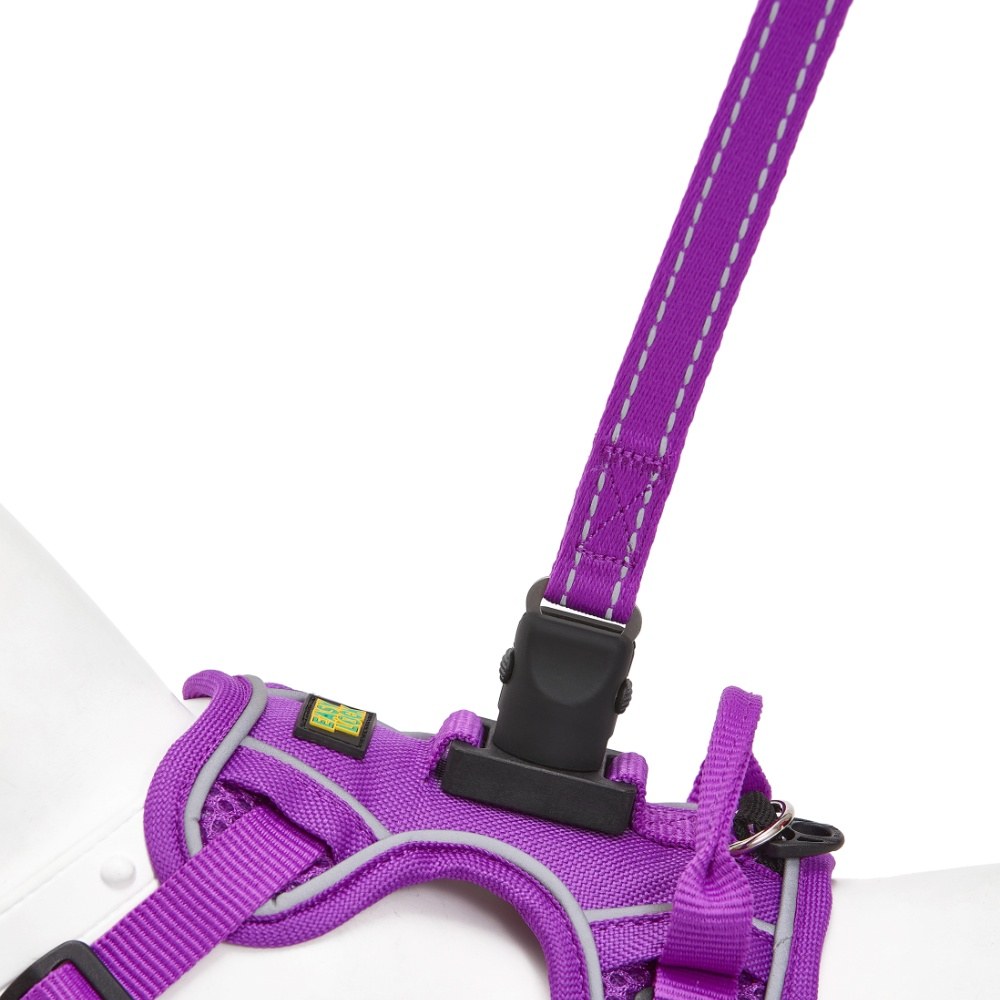
Ask one question before price or lead time: does the factory build the closure, or buy it? That answer sets the limit on everything a buyer can change later — magnet grade, latch feel, housing dimensions, test data. What follows is the audit in the order a buyer should run it, from who owns the mould to the mechanism tests most suppliers cannot perform.
A magnetic dog harness manufacturer should be judged on one question before price, lead time or catalogue width: does it build the closure, or buy a module and sew it into a strap? Magnet grade, latch geometry, tolerance control and test data all follow from that answer, and so does the supplier's ability to change any of them when a market or a fit problem demands it. A factory that owns the mechanism can adjust behaviour on request, while an assembler can only adjust colour and packaging.
This article follows the audit sequence a buyer would actually run. It examines the three capabilities that separate a maker from an assembler, what magnets and latches each contribute, tolerance and assembly control, the five mechanism tests worth requesting, and the physical evidence a mould provides. Each section ends with the judgement a buyer should carry into the next stage of the conversation.
What Separates a Maker From an Assembler
Three capabilities separate the two kinds of supplier, and all three can be observed in a single visit without a laboratory. Housing tooling comes first, because a factory that moulds its own housing controls wall thickness, actuator recess depth and strap channel geometry, and can move those dimensions when a batch seats badly. Control of the latch assembly follows the same logic, since a latch that arrives pre-assembled cannot be inspected for engagement depth or spring preload before it disappears inside the product. Mechanism testing is the third and the most frequently missing, because testing the closure alone under load, contamination and cold requires fixtures that assemblers never had a reason to build.
Four questions verify all three in under ten minutes: who designs the housing and can you show the mould, what is the magnet arrangement and is retention dependent on it, what is the spring material, and how is seating fixtured with what actuation-force record for the last batch? A factory that owns the design answers without leaving the room, often with parts in hand and drawings on a screen. An assembler answers the first generically and defers the rest to a colleague who is not available, which is itself the answer.
Magnet Grade and What It Actually Does
In a well-designed closure, magnets handle alignment and the latch handles retention, so magnet grade shapes how the product feels in the hand rather than how much load it can carry. Alignment quality depends on field strength, pole arrangement and the funnel geometry around the magnet: stronger magnets with poor geometry feel grabby and seat off-centre, while weaker magnets with a well-shaped funnel seat smoothly even with a leash in one hand. Buyers who ask only about holding force are measuring the wrong property, and suppliers who answer only with holding force are reading a datasheet rather than describing a design.
The common failure is over-reliance on magnet force for retention. Holding strength falls sharply with gap and is sensitive to temperature, so a closure that depends on it creeps under sustained load and eventually releases without warning. The question worth asking is what happens when the halves are separated by a few millimetres: does the latch still engage, or does the owner press hard and hope the dog stands still? That single demonstration separates engineered alignment from raw magnet strength.
The Latch Inside the Housing
The latch is where retention lives and it is the component buyers rarely see, so it deserves more attention than housing finish or the colour of the actuator. Engagement depth is how far the latch shoulder sits behind its seat; too shallow and the closure releases under shock load, too deep and actuation force rises past what a weak hand can manage. Spring specification is a material question more than a dimensional one, because stainless spring wire holds preload in humid conditions where coated carbon steel gradually loses it. Actuator isolation is the attribute most often compromised in cost-reduction work, since the button should move the latch without carrying strap load, or release force changes with tension and the closure becomes hardest to open exactly when the dog pulls hardest.
All three can be read from a cut sample with a caliper and a steady light, and requesting one is a cheap way to see how a supplier handles a technical question. A factory that sends a sectioned housing with measurement points marked has answered more than a brochure ever will, while a factory that sends a photograph of a finished product has answered nothing at all.
Tolerance and Assembly Control
A magnetic closure works inside a narrow clearance band, and most field complaints trace back to that band being missed rather than to a design flaw. Too tight and it jams with sand or in cold weather; too loose and it rattles, wears at the mating faces and eventually fails to seat. Ask for the tolerance on the mating interface and the inspection method used in production, because a number without a method is a claim rather than a control, and a claim cannot be audited on a sample bench.
Assembly consistency matters just as much, since hand-seated closures with variable force produce variable actuation feel across units in the same lot, and that variation never appears in dimensional inspection. This is also where small-breed sizing is decided, because housing mass that is trivial on a large dog is significant on a toy breed. A platform scaled from XS to XL without reviewing mass ratio will feel wrong at the small end even when every dimension sits inside tolerance, which is why tolerance, fixtured seating and mass ratio belong in one conversation.
Testing a Magnetic Closure Properly
Five tests cover the mechanism, and the last two are the ones most suppliers omit because they require equipment the supplier never had a reason to buy. The first three are standard practice in any closure factory, while the last two separate a product tested for a catalogue from one tested for the market it will actually be used in.
| Test | Question answered | Evidence to request |
|---|---|---|
| Static pull | Does the latch hold at rated load | Peak value, sample size, lot reference |
| Loaded actuation | Is release independent of tension | Force at zero and rated load |
| Cycle life | Does feel drift over use | Cycle count and drift limit |
| Contamination | Does sand or salt jam it | Procedure and post-test actuation |
| Cold actuation | Does force rise at low temperature | Temperature and measured force |
A supplier who can produce results for the first three but not the last two has tested the product rather than the user experience. Contamination and cold actuation generate most returns in northern and coastal markets, and both are cheap to simulate once the fixture exists. Requesting all five with method and sample size attached filters suppliers faster than any questionnaire, and material behaviour under those conditions is covered further in our industry notes.
What the Mould Proves About a Magnetic Dog Harness Manufacturer
The housing mould and a cut cross-section are the two pieces of physical evidence that cannot be talked around, because they carry tolerance decisions, wall thickness and magnet protection in a form a buyer can measure. Ask to see the parting line and gate location first, since a well-designed mould places the gate away from the load-bearing face where gate marks would create a stress riser. Then check wall thickness at the strap channel, because too thin deforms under load and too thick adds weight without adding strength. The actuator recess is the third feature worth reading, since its depth sets accidental-contact resistance and its draft angle decides whether the button returns cleanly after a press.
The cross-section answers the corrosion question that a finished product hides for a year. Ask how the magnets are isolated from moisture, whether through a sealed housing, a coated magnet or a plated carrier, because each behaves differently after salt-water exposure and only one is visible in section. The same section should show how the magnet is retained, since a press-fit magnet can migrate under impact while an overmoulded one cannot. Temperature belongs in this conversation too, because magnet performance changes with temperature and not linearly across grades, which is why mould features, magnet retention and sealing method belong in the supplier audit rather than in the complaint log.
The EASY LOCK Position
EASY LOCK was founded in 2018 on more than 15 years of webbing manufacturing experience, and the fifth-generation EASYLOCK magnetic system is our own platform rather than a purchased module. The platform uses a magnetic stainless steel quick-connect with a mechanical latch, one-hand single-touch release and 190kg+ pull testing. Magnets bring the halves into position, the latch carries load, and a recessed actuator moves the latch without carrying tension, a division of labour that development settled over three years and more than 100 rounds of material testing.
Because we weave and assemble in one facility, housing finish, strap channel and webbing specification are adjustable at production level rather than fixed by a catalogue. That is why the audit above can be answered here with drawings, moulds and test records instead of a description, and why the release is covered by national patents including Mag-Clip. Technical detail is on our closure technology page, and the finished range is shown on the magnetic dog harness collection.
Frequently Asked Questions
Q1: Is a stronger magnet always better?
No. Magnets handle alignment rather than retention, so stronger magnets with poor geometry feel grabby and can make the closure harder to seat cleanly. The funnel shape and pole arrangement matter more than the holding force printed on a datasheet, and a stronger magnet is only useful when the geometry around it is designed to match.
Q2: Can a magnetic closure be used on a strong puller?
Only when it includes a mechanical latch rated above the load the dog can generate. Magnet-only closures creep under sustained load and should not be specified for that segment, regardless of how the holding force is quoted at ambient temperature.
Q3: What is the most common manufacturing defect?
Inconsistent seating force from hand assembly. It does not appear in dimensional inspection and shows up as variable feel across units in the same lot, which is why fixtured seating and per-batch actuation sampling matter more than final visual checks.
Q4: Does the housing need to change across sizes?
Not necessarily, but mass ratio should be reviewed at the small end. A platform that feels balanced on a large dog can feel heavy and badly weighted on a toy breed, even when every dimension sits inside tolerance.
Final Thoughts
The right magnetic dog harness manufacturer owns the closure, not just the sewing line. Housing tooling, latch assembly, mechanism-level testing, tolerance discipline and sealing method are the five capabilities that turn a catalogue claim into something a buyer can verify on the floor, and that ownership is the only durable reason to choose one magnetic dog harness manufacturer over another.
Inspect the Mechanism, Not the Sample
Ask us for the housing mould, the latch assembly and the actuation records. We will walk your team through each before you place an order.
Request a Mechanism Walkthrough