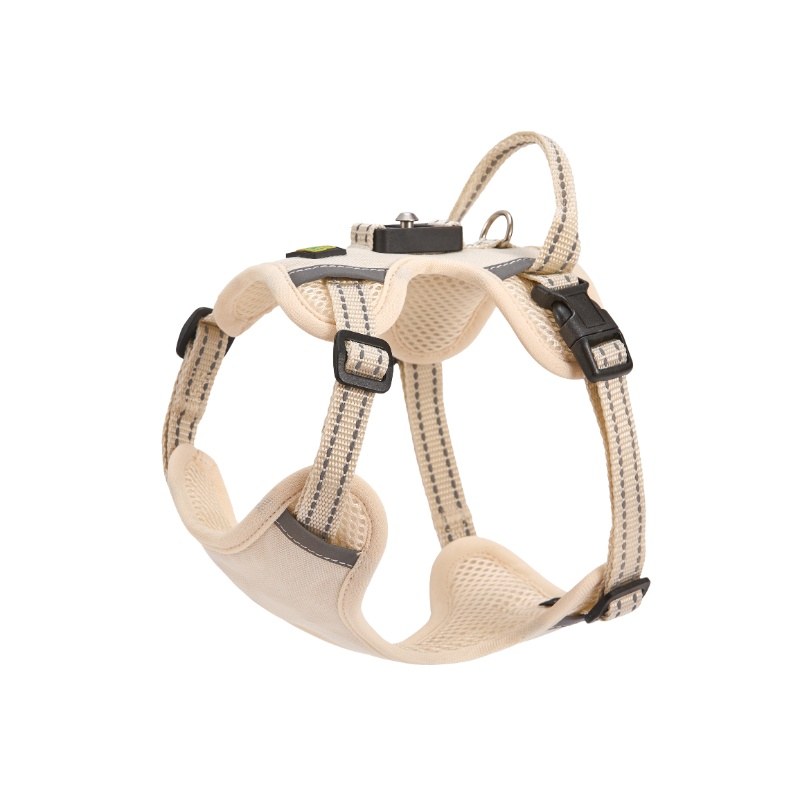
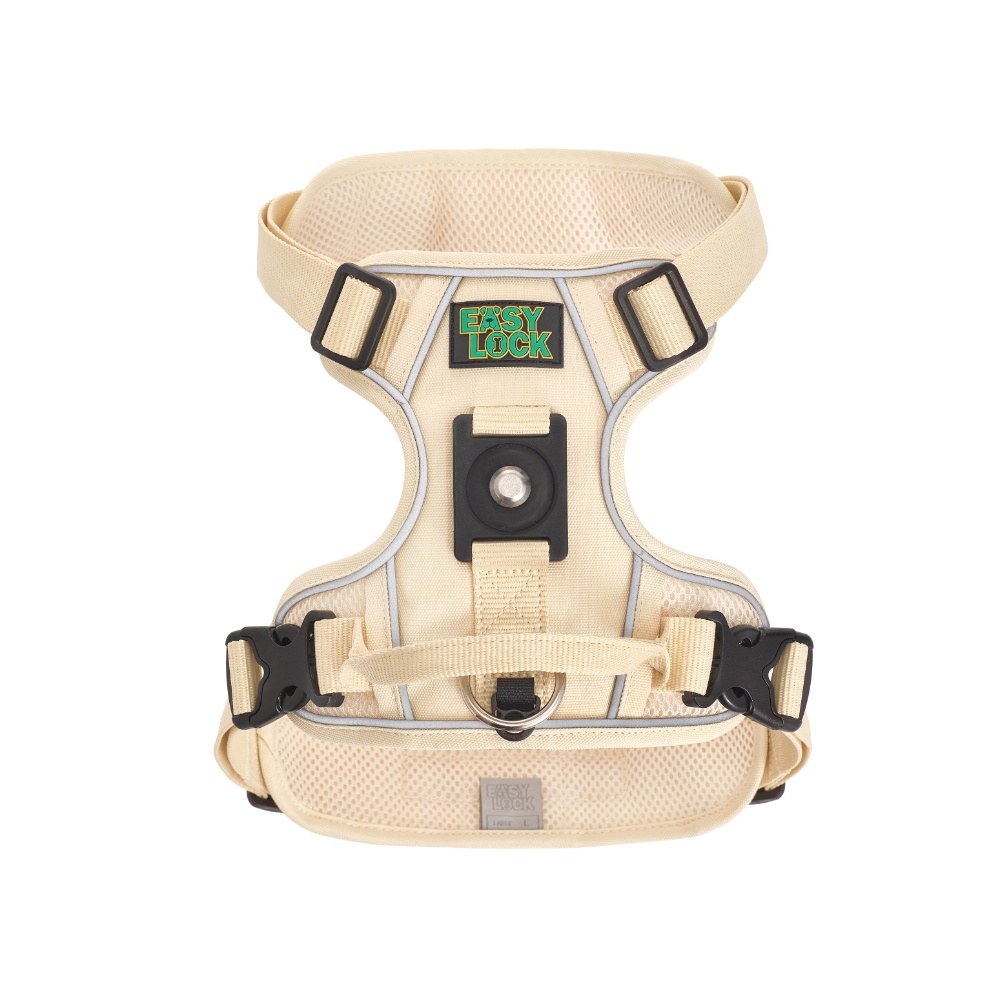
Magnetic Dog Harness Design: Features That Support Easy and Secure Fitting
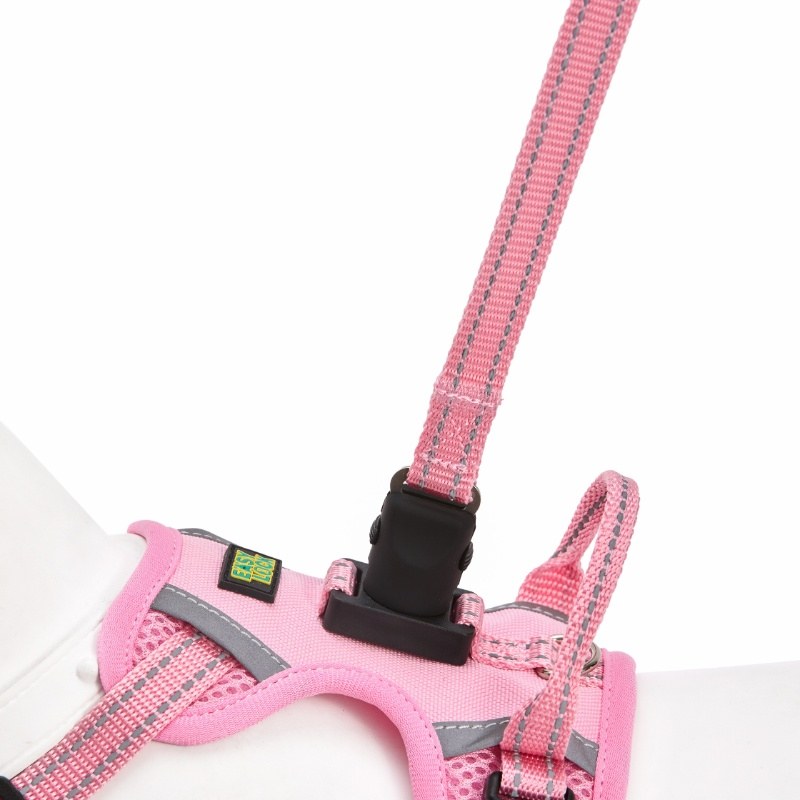
Magnetic dog harness design has to solve one contradiction: the closure must seat with almost no effort and still hold when the dog lunges. The resolution is division of labour rather than a cleverer spring. Magnets handle approach, a latch handles retention, and a recessed actuator handles intent.
Magnetic dog harness design succeeds when easy fitting and secure fitting come from different parts of the closure instead of from one part asked to do both. That single structural decision determines whether the product feels effortless on the first morning walk and still holds when a dog lunges at a cat. Designs that compress both jobs into the magnet or the spring end up either hard to close or too easy to open under load, and there is no tuning point between the two.
The sections that follow work through the design in the order a development team actually faces it: what easy fitting requires, what secure fitting requires, the tension conflict between them, housing placement and panel geometry, fit grading, and the failure modes worth designing out before a mould is cut. Each section closes with the check that belongs in an approval meeting.
What Easy Fitting Actually Requires
Easy fitting is not a soft closure; it is a closure that tolerates imprecise approach, and four features produce that tolerance. Self-alignment geometry comes first, because a tapered lead-in around the housing draws the halves together within a few centimetres and turns aiming into closing. Single-hand operation comes second, since the other hand is already holding a leash, a treat or a dog, and a closure that needs two hands fails the first morning walk regardless of how well it tests on a bench.
Clear seating feedback is the third feature: an audible click plus a tactile detent tells the owner the closure is engaged without a visual check, which matters most on a dark street or a wet driveway. Neck access is the fourth, and the most often overlooked, because the harness has to pass over the head without loosening the chest strap. If the owner re-adjusts after every walk, the product has not achieved easy fitting — it has only achieved an easy buckle.
What Secure Fitting Actually Requires
Secure fitting comes from load path design rather than from closure strength alone, and three structural conditions have to hold at once. Load has to bypass the actuator, so that strap tension presses the latch into its seat instead of pressing against the release button. The closure also has to sit on a stable panel, because a housing mounted on a soft unsupported section rotates and pulls at an angle under load, which biases the latch toward release exactly when tension peaks.
The third condition is that the strap cannot creep through the housing. Once webbing slides, the harness loosens progressively during a walk and the closure ends up loaded off-axis, which no amount of latch strength corrects. Those three conditions explain why a closure rated well above the dog's pull can still fail in the field: the rating describes a mechanism tested in a fixture, while geometry describes a product tested by a dog.
The Tension Conflict and How It Is Resolved
The central conflict is that a closure easy enough to press is often easy enough to trigger by accident, and tuning a single spring cannot resolve it. Separation is the answer: a recessed actuator set below the housing surface requires a directed press, while a paw, a branch or grass produces a glancing force at the wrong angle and does nothing. This is why actuator depth is a design parameter rather than a cosmetic one, and why a flush button is the wrong choice on a product used outdoors.
Actuator travel adds a second layer of protection. Short travel feels precise and triggers easily, while longer travel with a distinct detent feels deliberate and resists incidental contact, at the cost of a slightly slower close. The test that confirms the resolution is loaded actuation: apply rated load, then measure release force, and if the figure is roughly unchanged from rest the two paths are genuinely independent. A closure whose release force climbs with tension will be hardest to open at the moment the owner most needs it open.
Geometry: Housing Position and Chest Panel
Housing position affects comfort and closure behaviour at the same time, and the two requirements usually point to the same place. Placing the housing laterally rather than on the sternum reduces pressure at the highest-contact point and puts the closure on a flatter section of panel, which stabilises engagement. Locating it near an existing seam or reinforced area reduces local flex, because a closure on a soft flexing section is harder to seat and wears faster at the housing edge.
For small breeds, housing mass becomes the deciding variable. A platform that feels balanced on a large dog can sit heavily on a toy breed, and no amount of padding fixes a weight distribution problem, because the mass still sits at one end of the product. Chest panel depth then decides whether the housing rests on the sternum or above it, and the measurement that matters is depth at centre front rather than overall harness length.
Fit Ranges and Grading
A magnetic closure removes slack from the system by seating at a fixed engagement point, which makes adjustment range more important rather than less. Each size needs enough travel to cover variation inside its band and a modest overlap with the next size, because too little travel produces hard boundaries at retail while too much creates ambiguity on the shelf. Grade by measured chest girth and neck circumference together, since grading on girth alone produces a harness that fits the body and binds at the neck.
Every size should be tested at both ends of its range rather than at the midpoint. A size that only fits mid-range will be returned by the customers at the edges, and those are usually the dogs with the most difficult proportions: deep-chested sighthounds, barrel-chested bulldogs, narrow-headed terriers. The overlap between adjacent sizes is where those returns are prevented, and it costs nothing at the design stage.
Design Checks Before Approval
Four checks cover the easy-versus-secure balance, and three of them can be run without instruments. They belong in the approval meeting rather than in the quality manual, because each one answers a question that a drawing cannot.
| Check | What it confirms | Pass condition |
|---|---|---|
| Blind seating | Self-alignment geometry | Seats one-handed without looking |
| Loaded actuation | Load path independence | Force unchanged at rated load |
| Contact release | Accidental trigger resistance | No release from paw or brush contact |
| Extended walk | Strap creep and housing rotation | No adjustment needed after thirty minutes |
Failure Modes to Design Out of a Magnetic Dog Harness
Four failure modes account for most complaints on a magnetic dog harness, and all four are cheaper to correct in a drawing than in a mould. Partial seating comes first: the closure clicks but the latch is not fully engaged, usually because lead-in geometry lets the halves meet at an angle, and a deeper funnel with a single engagement depth removes the ambiguity. Housing rotation follows when the strap channel is too wide or the housing sits on an unsupported panel, so the closure turns under load and pulls off-axis.
Strap creep is the third, where the harness loosens during a walk because webbing friction is mismatched to the housing, and it reads as a closure fault while being a material pairing issue. Accidental release is the fourth, following from an exposed actuator or a latch with shallow engagement. Cold weather makes all four worse at once, since housing and webbing both stiffen and the actuator demands more force exactly when a gloved hand has less precision, which is why low-temperature actuation should be tested with a glove rather than a bare hand on a warm bench.
The EASY LOCK Position
EASY LOCK was founded in 2018 on more than 15 years of webbing manufacturing experience, and the fifth-generation EASYLOCK magnetic system separates the two jobs deliberately: magnetic alignment, mechanical latch, recessed single-touch actuator. The platform is pull-tested to 190kg+, developed over three years with more than 100 rounds of material testing and protected by national patents including Mag-Clip, with sizes running XS to XL on consistent hardware.
Construction references are on the dog harness collection page, and a completed programme is shown in the Vitality Collection. What a buyer sees there is the same structure described above: alignment at the funnel, retention at the latch, intent at the button.
Frequently Asked Questions
Q1: Can a magnetic closure be opened by the dog?
A recessed actuator requiring a directed press makes it unlikely. Paws and body contact produce glancing forces rather than a deliberate press at the correct angle, which is the difference between a trigger and a button.
Q2: Does the closure replace the need for adjustment?
No. It removes the alignment step, not the fit step. Neck and chest adjustment remain necessary for breed variation and for growth, and the adjustment range still has to overlap between sizes.
Q3: What makes a magnetic harness feel loose after a walk?
Strap creep through the housing or a slider. The closure is engaged correctly and the webbing has moved, which is why the fix is matching weave friction to the hardware and re-testing after washing rather than changing the latch.
Q4: Is the platform suitable for small breeds?
Yes, but housing mass should be reviewed against body weight at the small end. Weight distribution is a design decision, and a harness that tips toward the closure on a flat surface will sit off-centre on a moving dog.
Final Thoughts
Magnetic dog harness design is resolved by division of labour inside the closure: magnets for approach, a latch for load, a recessed actuator for intent. That structure delivers easy fitting and secure fitting without trading one against the other, and it makes the approval checks meaningful rather than ceremonial. Blind seating, loaded actuation and housing rotation are the three results worth confirming before anyone commits to tooling for a magnetic dog harness.
Check the Balance Before Tooling
Send your pattern and target sizes. We will test blind seating, loaded actuation and strap creep before a mould is cut.
Book a Magnetic Fit Review