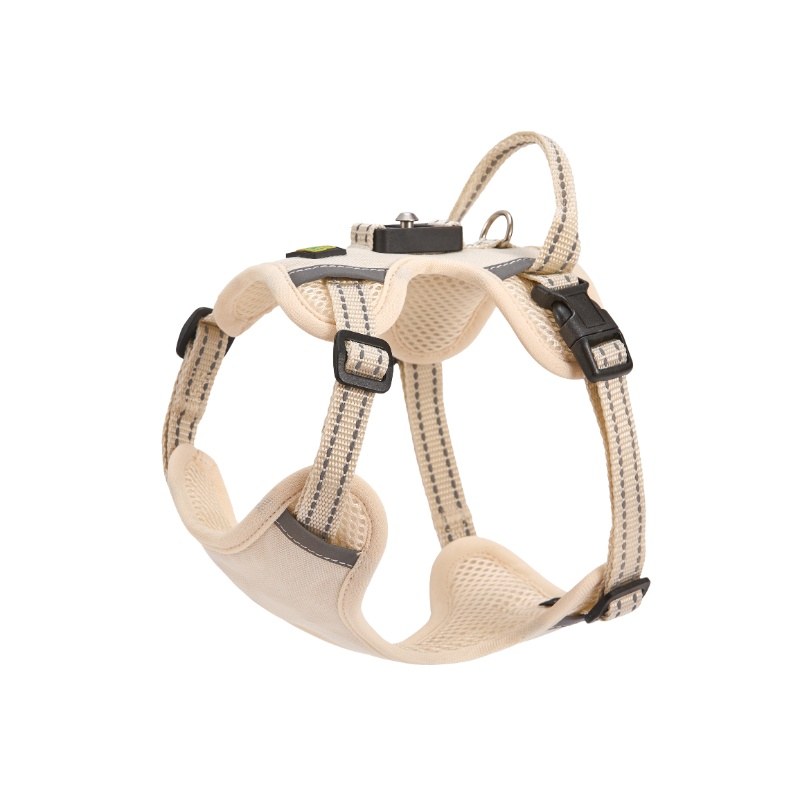
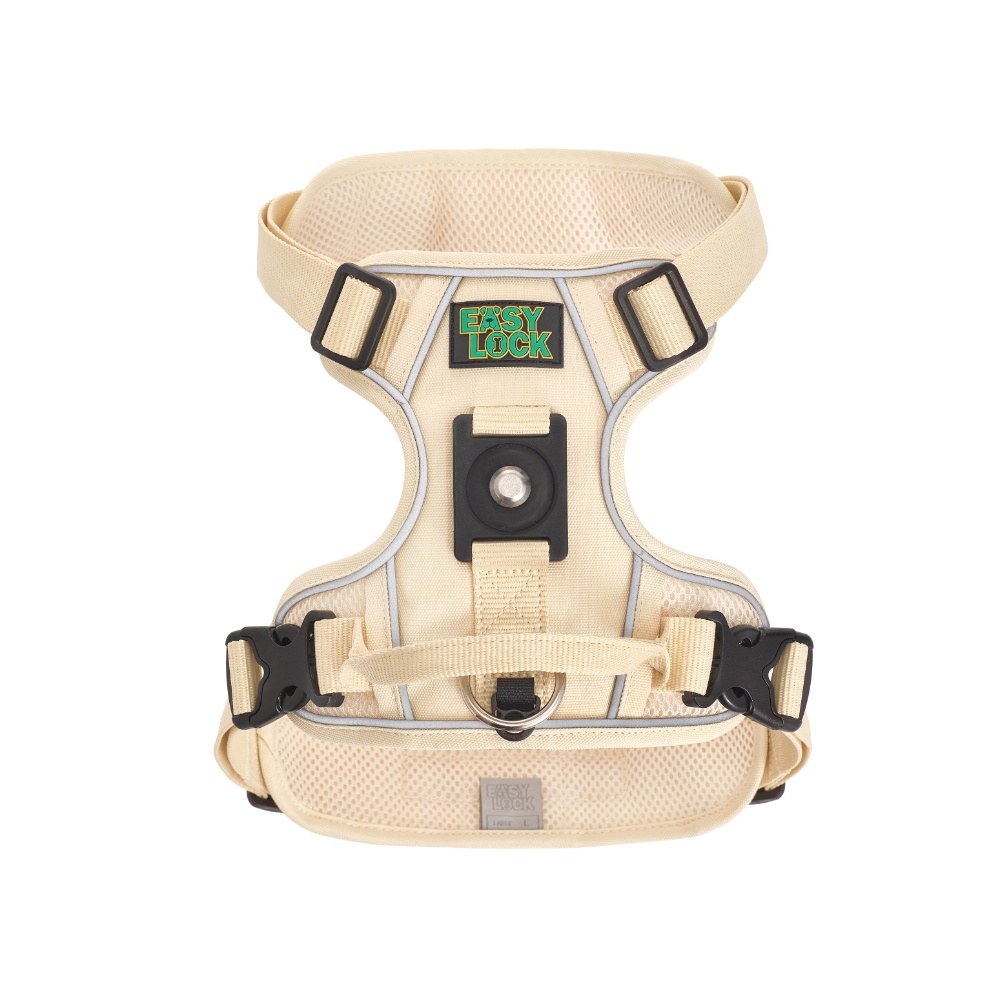
Custom Magnetic Dog Harness: Buckle Design, Materials, and Manufacturing
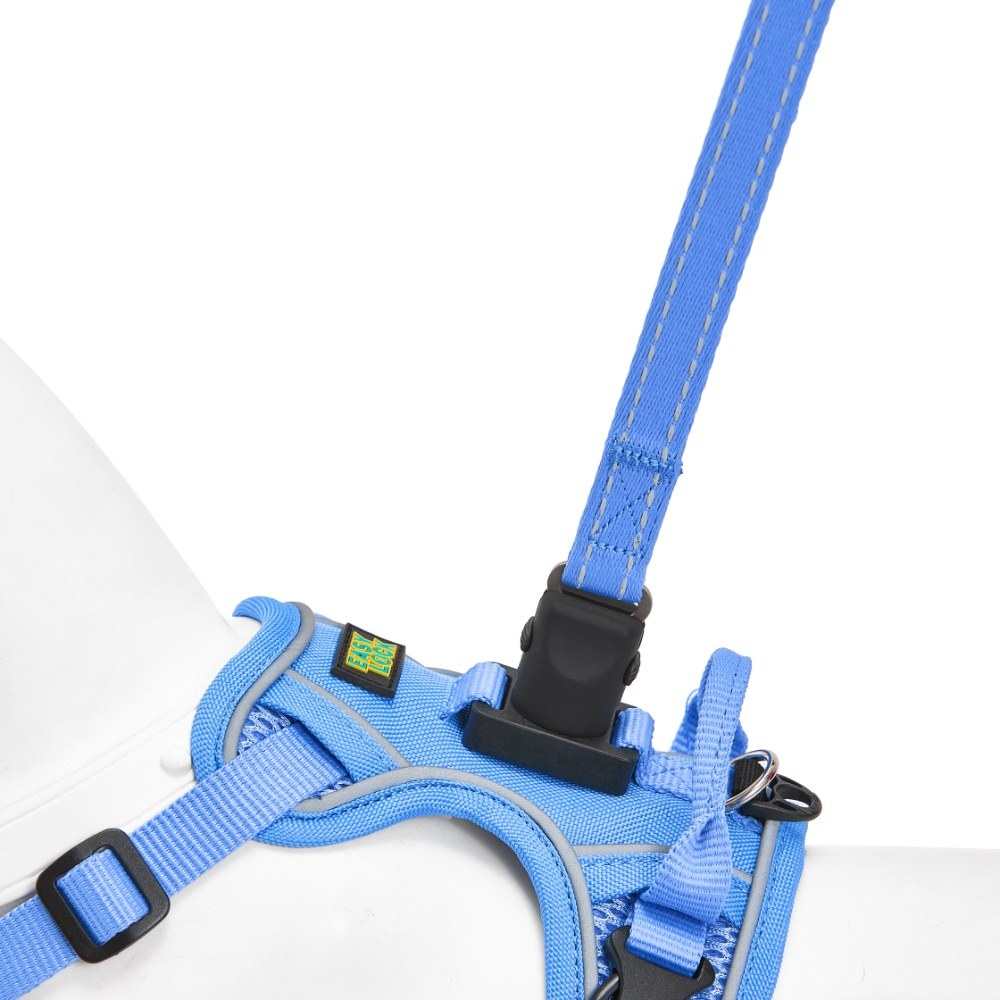
A custom magnetic dog harness splits into configuration and development, and only configuration is cheap. Webbing, finish, trim and packaging move inside an existing platform without touching a mould, while latch geometry and magnet arrangement mean a new tool and a new validation cycle. Sorting a brief into one of those two buckets is the first decision worth making.
A custom magnetic dog harness is built from two different kinds of work, and confusing them is what stretches a one-season project into two. Configuration changes what the customer sees and feels — webbing, housing finish, trim, packaging — and runs on existing tooling with a short sample cycle. Development changes how the closure behaves, which means a mould, a prototype mechanism and a validation programme that cannot be compressed by adding people.
This article separates the two, then walks through the decisions in the order they arise: what moves without tooling, the three levels of buckle customization, how webbing and closure have to be paired, where custom briefs usually fail, and how tooling and mould life set the real lead time. Each section ends with the answer a buyer should carry into the next conversation with a factory.
What Can Be Customized Without Tooling
Four categories move inside an existing closure platform, and together they account for most of what a retail customer actually notices. Webbing is the largest lever: width, weave density, edge finish and colour can all change provided the width still passes through the housing channel without binding. Housing finish is the second, where matte, gloss, painted and anodized treatments shift perceived product tier more than any dimensional change, because shoppers judge closure quality by surface and weight long before they test the mechanism.
Trim and packaging complete the set. Reflective banding, contrast stitching, piping, label placement and D-ring style all sit within existing seam lines, so they add visual differentiation without touching pattern geometry. Packaging — hangtag, box, polybag, size marking and care text — is the cheapest differentiation per unit and the one most often decided last, which is a mistake, since the carton is where a configured product either reads as a brand or as a generic import.
Buckle Customization in Three Levels
Buckle work is where scope grows fastest, so it pays to name the level explicitly before anyone quotes. At level one the housing tool and internal mechanism stay untouched and only colour, texture and branding change, which reopens no validation at all. At level two the housing shape, actuator depth, strap channel width or overall housing size change within the same mechanism architecture, which requires mould modification and a fresh actuation-force study.
Level three replaces the mechanism: latch geometry, magnet arrangement or load class change, and the project becomes a full development cycle with tooling, functional prototypes and mechanism validation. Most briefs that arrive asking for a unique buckle turn out to need level one or two once the actual complaint is named. Asking which behaviour should change — feel, size, grip, alignment — converts a vague request into a scoped one, and usually saves a season.
| Stage | Configured program | Development program |
|---|---|---|
| Brief | Palette, webbing, finish, packaging | Behaviour to change, load class, market |
| Sample | Existing pattern in new materials | Functional prototype of the mechanism |
| Validation | Fit, wash and pull on the variant | Loaded actuation, cycle, contamination, cold |
| Tooling | None | Housing mould, assembly fixture |
| Approval | Golden sample | Capability study, then golden sample |
Pairing Webbing With a Magnetic Closure
A magnetic closure places three demands on the strap that a conventional side-release buckle does not, and a mismatch shows up as a closure fault even though the closure is fine. Channel clearance is the first: too much thickness and the housing rotates out of position under load, too little and the assembly rattles and wears at the mating faces. Dimensional stability is the second, because post-wash shrinkage changes the strap tail length and how the termination seats inside the housing.
Surface friction is the third and the least discussed. The strap has to slide freely enough that alignment is not fighting drag, yet hold firmly enough that the housing does not creep along it during a walk. The characteristic failure of a poor pairing is a harness that seats perfectly when new and then demands a harder press month by month as the strap edge deforms. Because EASY LOCK weaves its own webbing, that pairing is tuned at the source rather than negotiated between two suppliers; construction options appear on the dog harness range page.
Where Custom Requests Usually Go Wrong
Three errors account for most of the delay in magnetic harness programmes, and all three are visible before a sample is made. The first is specifying a smaller housing for aesthetics without reviewing latch volume: a smaller shell either reduces engagement depth or forces a smaller latch, and a smaller latch changes the load class the product can claim. The second is changing webbing and closure independently, since each component can pass on its own and still behave badly as a pair, particularly on channel clearance and creep.
The third is approving on a mechanism prototype rather than on a sewn harness. Actuation feel changes once the housing is anchored to webbing under tension, because the strap now pulls the housing against the latch instead of leaving it free in the hand. Approval has to happen on the assembled product, under load, or the first bulk run becomes the real approval stage — which is the most expensive place to discover a preference.
Tooling and Mould Life in a Custom Magnetic Dog Harness Program
Tooling is the longest single item in a custom magnetic dog harness programme and the one most often missing from the launch plan, because it runs on its own schedule separate from sewing capacity. A mould modification begins with a dimensional study of the existing tool, then a trial shot, a dimensional report and an assembly trial, and each step produces a decision point that cannot be skipped without moving risk into production. Assembly fixtures and go/no-go gauges matter as much as the mould, since a fixture controls seating depth and press angle while a gauge lets production check clearance without a laboratory.
Mould life sets the realistic ceiling on the programme. A tool rated for a limited shot count is adequate for a test run and unsuitable for a multi-season range, and the difference is invisible in a sample. Ask for expected shot count, steel grade and maintenance interval, because a tool that needs polishing every few thousand shots adds a recurring cost that never appears in a quotation. Then plan the launch backwards from the tooling schedule rather than forwards from the order date, since a plan built from the shipping window almost always compresses validation, the one stage that cannot be recovered later.
The EASY LOCK Position
EASY LOCK was founded in 2018 on more than 15 years of webbing manufacturing experience and supplies OEM and ODM programmes to customers in 15 countries. Because both webbing and closure are built in one facility, level-one and level-two customization can be handled without reopening mechanism validation, and housing colour, strap channel and webbing specification are production parameters rather than catalogue constraints.
The platform is the fifth-generation EASYLOCK magnetic system: a stainless steel quick-connect with a mechanical latch, single-touch release and 190kg+ pull testing, developed over three years with more than 100 rounds of material testing and protected by national patents including Mag-Clip. Palette range is illustrated by the Pastel Collection and the Vitality Collection.
Frequently Asked Questions
Q1: Can a smaller housing be used without losing strength?
Only within limits set by latch volume and engagement depth. Below that threshold, strength has to come from material grade rather than from size, which changes both cost and the validation scope attached to the part.
Q2: How many housing colours can be offered?
Any colour inside the finishing capability, but very low volume per colour is limited by batch size rather than by tooling. Consolidating to a smaller palette improves colour consistency and reduces setup and purge time on the moulding machine.
Q3: Does a custom closure require new certification?
Pet harnesses do not carry the type-approval structure of automotive or protective equipment. What is required is validation: pull, actuation, cycle and contamination data for the actual configuration being shipped, not for a similar one.
Q4: What should be tested on the first production run?
Actuation force across sampled units, seating consistency, pull to rated load and a contamination spot check. All four are compared against the approved assembled sample rather than against a specification sheet.
Final Thoughts
A custom magnetic dog harness earns most of its differentiation through webbing, finish and packaging, and reaching for the mechanism first usually adds a season without adding shelf appeal. The productive sequence is to exhaust configuration, define the behaviour that genuinely needs to change, and only then open a development programme. More on how the factory is organised, and on the tooling that backs a custom magnetic dog harness programme, is on the company page.
Define the Layer Before the Sample
Send your brief and name the behaviour that should change. We will tell you whether it sits in configuration or in development.
Scope My Custom Program