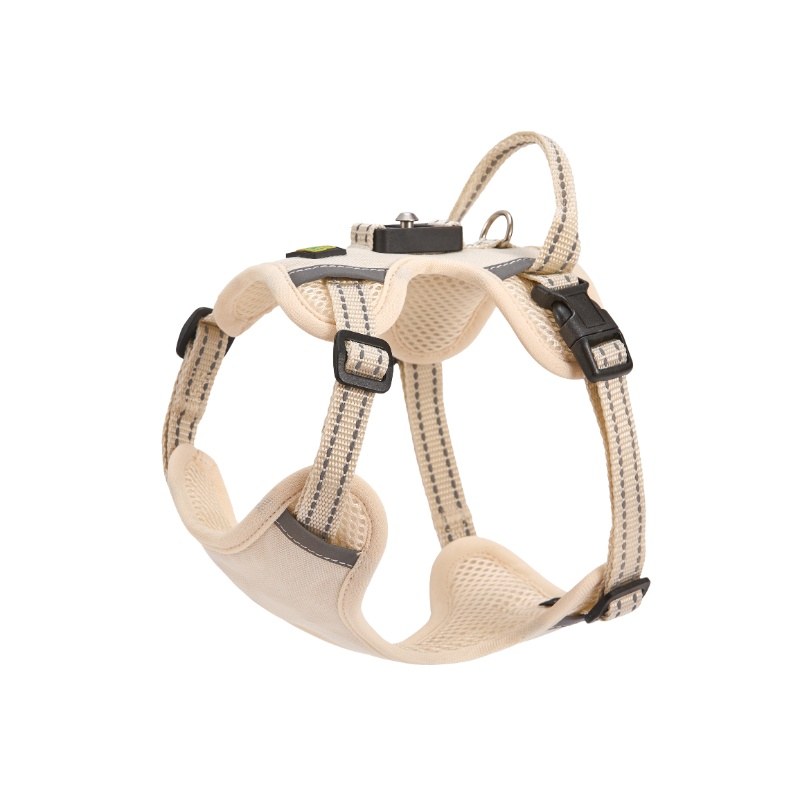
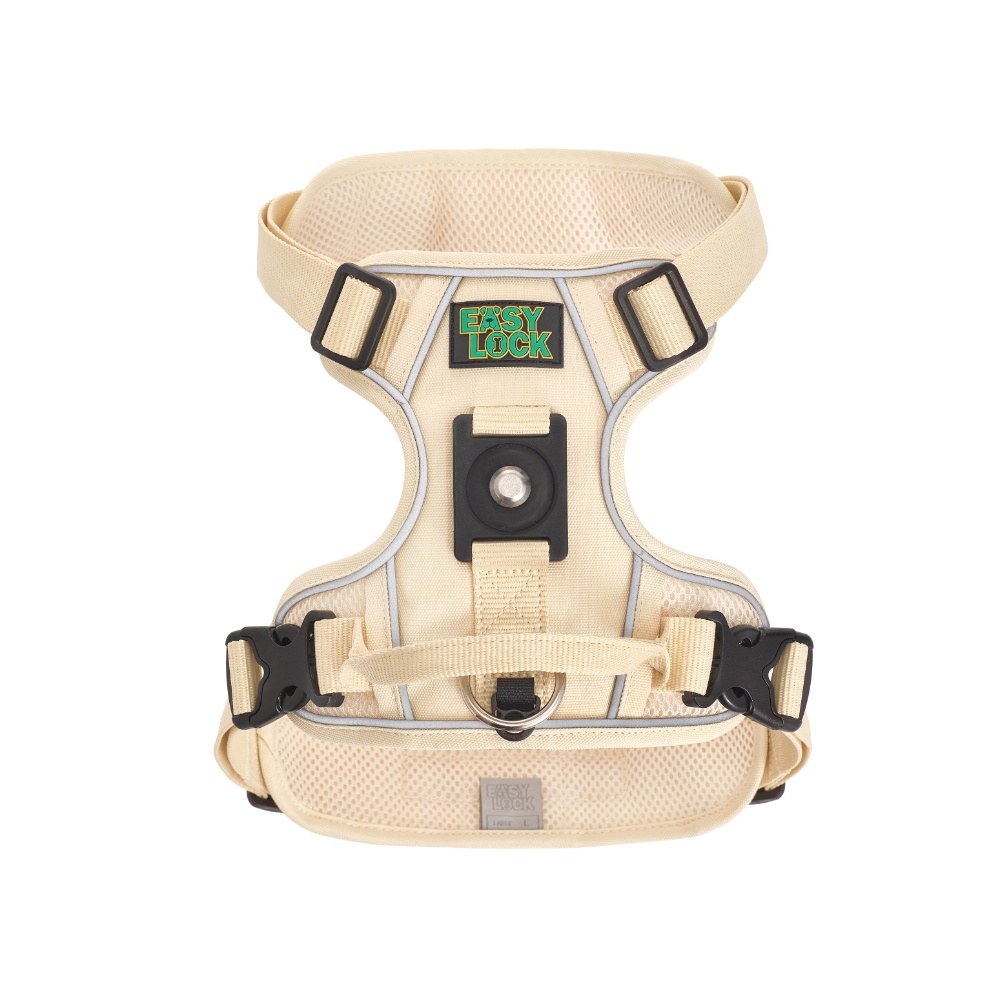
Adjustable Dog Harness Wholesale: What Buyers Should Check Before Ordering
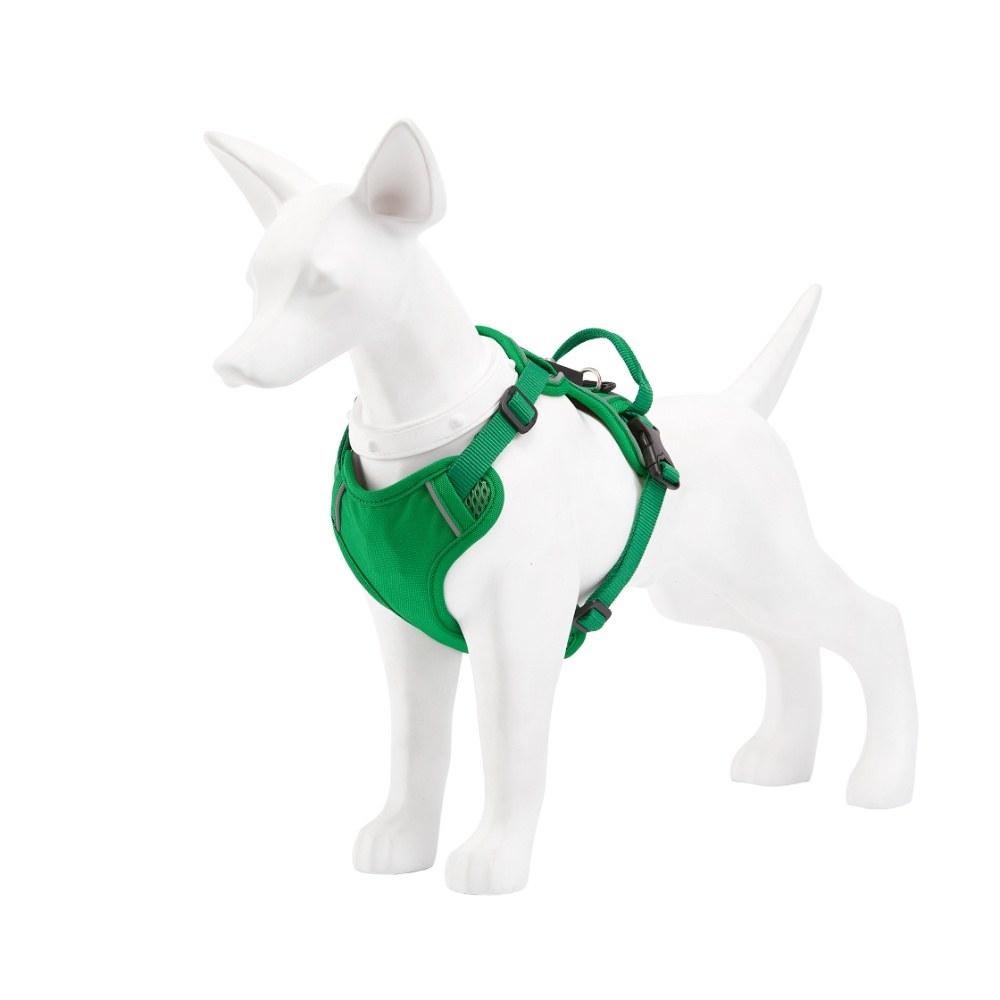
Wholesale adjustable dog harness programmes fail on the mix, not on unit quality. Size curve, colour split, hardware specification, packaging format and reorder rhythm are the five decisions that decide whether a container turns or sits. All five are cheaper to settle on paper than in a warehouse.
A wholesale adjustable dog harness order should be checked in a fixed order: size curve first, colour split second, hardware specification third, packaging fourth, reorder lead time last. That order follows the cost of getting each one wrong. A mistaken size curve produces dead stock across five SKUs, while a mistaken hardware specification produces returns for a year and damages the brand rather than the balance sheet alone.
What follows is a buying sequence rather than a catalogue tour: how to build the size curve from measurement, how to structure colour around core and accent, how MOQ is really calculated, the five pre-shipment checks that cover commercial risk, the documents worth collecting, and the cost blocks that explain an unusually low quotation. Each step produces a number you can carry into a supplier meeting rather than an opinion you have to defend without evidence.
Start With the Size Curve, Not the Colour Card
Size distribution should be built from the local dog population rather than from an even split across five sizes, because an even split creates dead stock at one end in almost every market. Urban markets with a strong small-breed base need weight on XS and S, while suburban markets with sporting and working breeds need the middle and upper sizes. The curve is a market statement, not a manufacturing convenience.
Ask the supplier for the chest-girth range each size actually covers, with tolerances, then map it against your estimate of the local population. A supplier who answers with size labels rather than measurements is working from an inherited template. Overlap between adjacent sizes is useful in a wholesale mix because it covers gaps, but only if you know where it sits, since unmeasured overlap turns into cannibalisation between your own SKUs.
Build a Core-and-Accent Mix
Two or three core colours should carry volume across the full size run, with accent colours confined to the middle sizes where sell-through is fastest. This structure keeps SKU count manageable and avoids the standard wholesale trap of forty SKUs with four units each, where every style looks stocked and nothing can be reordered economically.
| Role | Coverage | Commercial purpose |
|---|---|---|
| Core colours | Full XS to XL | Carries volume, supports repeat orders |
| Accent colours | S to L | Captures fast-turning sizes, limits lot risk |
| Seasonal statement | One or two sizes, one colour | Tests demand with low inventory exposure |
| Size extensions | XS or XL, core colours | Completes the range for specialist retail |
Decide early whether the harness sells alone or as a matched set with a collar or seatbelt. Sets raise basket value and double the SKU arithmetic, so the decision belongs before packaging design rather than after it, when the printed card has already fixed the pack dimensions.
MOQ Should Be Quoted Three Ways
A single MOQ number is close to meaningless in this category, because the binding constraint is usually the dye lot rather than the unit count. Ask for MOQ per model, per colour and per size within a colour: the per-colour minimum reflects dye-bath setup economics, while the per-size minimum reflects cutting efficiency, since a nested cut wastes less material than a single unit. Understanding those two drivers lets you build a first order that is small in total but efficient in structure.
Confirm the hardware batch constraint as well. Buckles and sliders are purchased in lots larger than a small order, which is why some factories are flexible on webbing colour and rigid on hardware finish. That asymmetry explains most of the surprises in a first quotation.
Five Pre-Shipment Checks That Cover the Commercial Risk
Appearance inspection alone misses the failures that generate returns, and five checks close the gap without laboratory equipment. Measure each size at both adjustment extremes to catch pattern or cutting drift, then cycle the sliders a set number of times before loading the strap and checking for creep. Inspect stitch integrity at the D-ring anchor, the chest panel junction and the adjustment zone, counting stitches wherever the specification defines them, because a skipped stitch at an anchor is a rejection rather than a cosmetic note.
Compare colour from the beginning, middle and end of the run under the same light, since lot variation is visible at the edges of a run long before it is visible in a single sample. Finally, check hardware at edges and contact points, where plating wear and corrosion start first. These five checks take an afternoon and prevent the complaints that cost a season.
Documents to Collect With the Inspection Report
Market-access documentation should arrive with the shipment rather than after a customs question. For Europe that means REACH SVHC and RoHS declarations, and for California Prop 65. For textile components, collect OEKO-TEX Standard 100 evidence, colourfastness results to AATCC 61 or ISO 105, and abrasion data to ASTM D4966, with ASTM B117 salt-spray results for metal parts.
Ask also for pull-test records tied to the production lot. A generic certificate from a previous year does not describe the goods in the container, and a document set that cannot be matched to a lot number is decoration rather than evidence.
Packaging: Decide Before Production Starts
Packaging is the most common reason a shipment arrives commercially unusable, and three questions settle it: whether the product hangs, sits or ships in a mailer, whether the label carries the regulatory text for the destination, and whether the pack protects the hardware in transit. For e-commerce a hangtag that survives compression matters more than a display box, while for brick-and-mortar the hangtag hole has to work with standard fixtures.
In both channels, size marking has to be legible without opening the pack, because illegible marking causes mis-sorting and mis-sorting produces wrong-size returns. Approve packaging at the pre-production sample stage, since changing a printed card after bulk starts is one of the few changes that reliably delays a shipment by weeks.
Costing an Adjustable Dog Harness Wholesale Order
Cost in an adjustable dog harness wholesale order is built from four blocks: material, labour at the stitch and assembly stages, inspection and packaging, and comparing only a unit quote hides which block differs. Material is driven by webbing width and hardware substrate rather than by colour, since a wider strap uses more yarn and a stainless component costs more than a plated one before plating is even considered. Labour concentrates at the adjustment zones where multiple stitch runs meet, so a design with four sliders and four anchors costs more to assemble than one with two.
Inspection cost depends on how many checks the buyer requires, and full dimensional sampling on every size is a different programme from AQL inspection on the finished lot, both legitimate if stated upfront. Packaging is usually quoted as one line but splits into artwork, material and packing labour, so a lower total often means a thinner polybag rather than a more efficient process. Ask for the four blocks separately, because a supplier who can break down a quotation can also tell you where a specification change will move cost.
Reorder Planning: The Data Worth Asking For
Wholesale relationships are won on the second order rather than the first. Ask for lot numbers on the packing list and retention of the production record for each lot, so that a complaint six months later can be traced to a batch rather than to a guess. Ask too for lead time broken down by stage: material, cutting, assembly, inspection and packing.
A single number hides the fact that materials dominate custom colours while assembly dominates repeat colours, and knowing which stage is binding lets you place a repeat order at the right moment instead of building an expensive buffer. That difference in lead time is often the real reason one supplier feels responsive and another feels slow.
The EASY LOCK Position
EASY LOCK was founded in 2018 on more than 15 years of webbing manufacturing experience and supplies OEM and ODM programmes to customers in 15 countries. Webbing, closure and assembly sit in one facility, so a colour split or size curve change does not require coordinating three suppliers. Our adjustable platform comes from a three-year development cycle with more than 100 rounds of material testing and is protected by national patents including the Mag-Clip single-touch release, with consistent hardware from XS to XL keeping a wholesale mix simple.
The range is listed on the product catalogue, with a coordinated palette example in the Vitality Collection. Both show how one platform carries a full size run without new hardware, which is what keeps a wholesale mix affordable at the entry point.
Frequently Asked Questions
Q1: What is a realistic first order for a new program?
Two or three colours, a full size run in the core colour, and accents limited to middle sizes. That combination tests the market without dead stock at the extremes.
Q2: Should colour be approved on a lab dip or a production sample?
A production sample. A lab dip represents a small controlled batch, while production represents the actual dye lot that your customer will see.
Q3: How should buyers compare quotations with different size splits?
Convert each to cost per size-SKU at a fixed total quantity, then compare the specification line by line. Price differences almost always map to webbing width, hardware substrate or inspection steps.
Q4: Can packaging be customised per market?
Yes, and it should be specified at pre-production. Provide the destination market, retail format, required regulatory text and barcode data before the sample is approved.
Final Thoughts
A wholesale adjustable dog harness programme is decided by five choices made before the purchase order: size curve, colour split, hardware specification, packaging format and reorder rhythm. All five are cheaper to fix on paper than in a container, and all five are visible in the first quotation if you ask for the breakdown. Material effects on wholesale performance are covered in our industry notes, and the same five decisions decide whether a wholesale adjustable dog harness range turns in its first season.
Plan the Mix Before the Order
Share your market, channel and target size distribution. We will propose a colour split, a size curve and a packaging format for your first order.
Build My Wholesale Mix