Adjustable Dog Harness Manufacturer: How to Choose a Reliable OEM Supplier
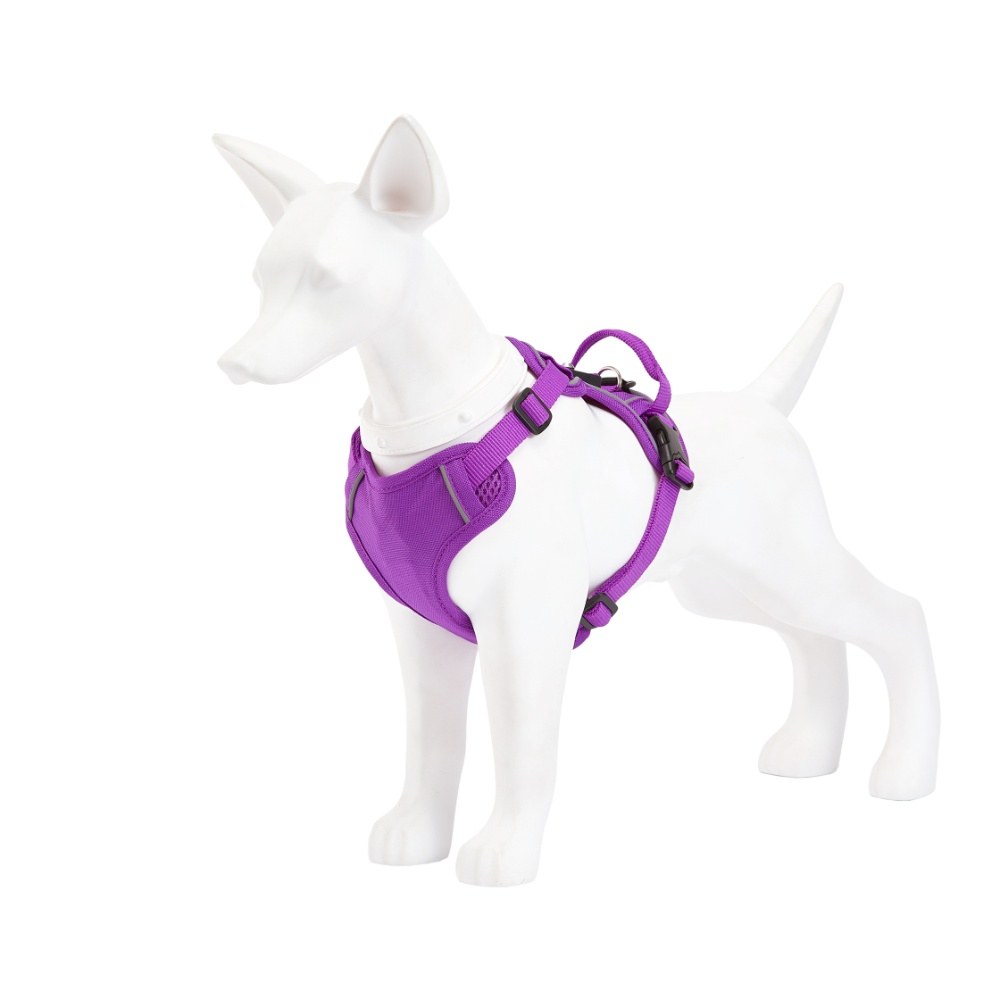
Four things decide whether an adjustable dog harness manufacturer is worth ordering from: who owns the looms, who inspects the hardware, who defines the stitch pattern at load points, and who controls size grading. All four can be verified in a single visit. Anything outside that list is presentation.
Choosing an adjustable dog harness manufacturer starts with one question that outranks price, catalogue size and lead time: does the factory weave the strap, or buy it finished? The answer decides how much of the product anyone in the chain actually controls. A factory with looms can hold width, density and post-wash shrinkage to a written specification, while a factory buying finished webbing can only accept what the mill ships that month.
The audit below follows that logic in four stages: webbing ownership, inbound hardware inspection, stitch specification at the load path, and grading across the full size run. Each stage produces evidence a buyer can hold rather than an assurance a salesperson can repeat, and the sequence matters because webbing constrains hardware, hardware constrains stitch, and stitch constrains how much load the grading can safely carry.
What an Adjustable Dog Harness Manufacturer Actually Controls
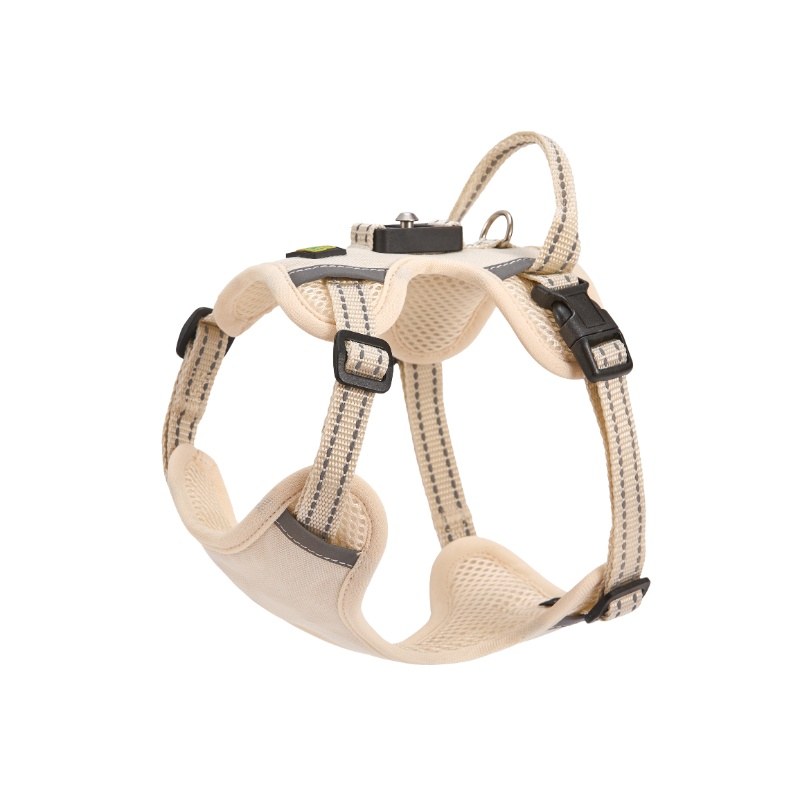
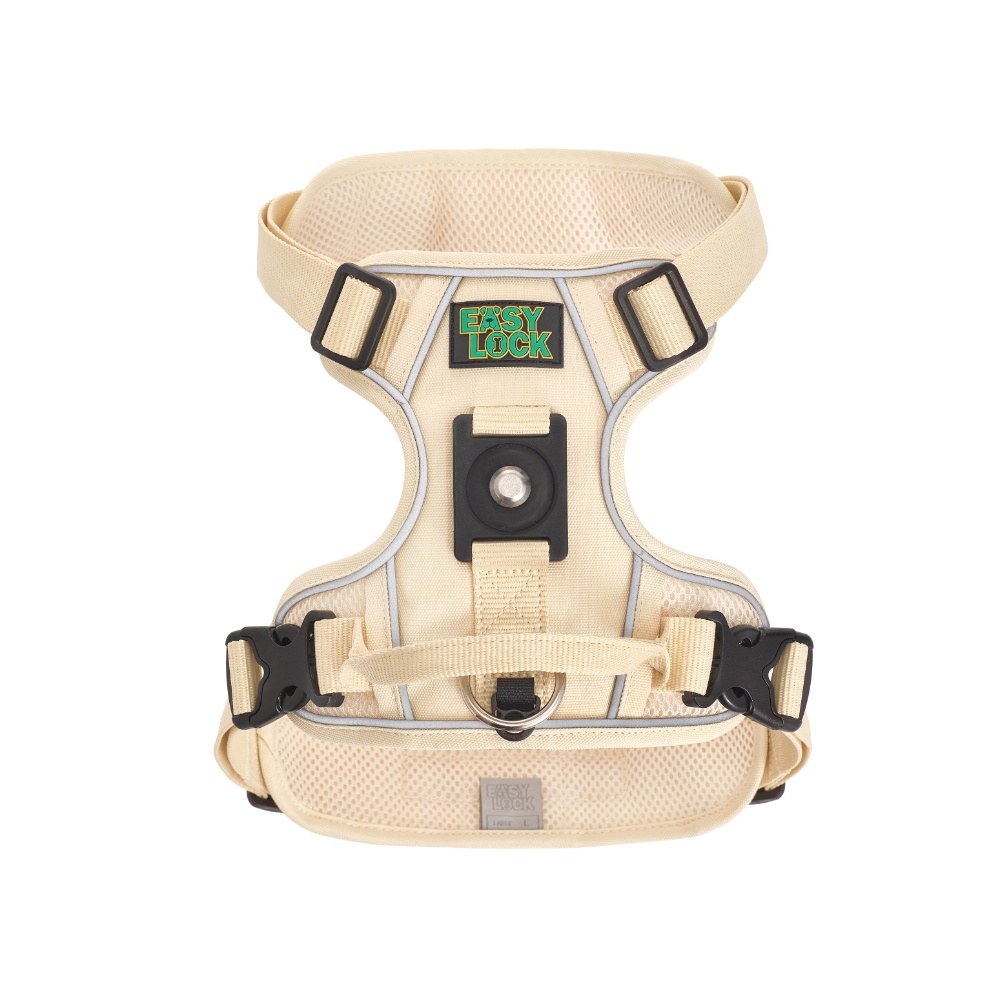
A manufacturer controls three variables that decide whether an adjustable harness fits and lasts: the weave of the strap running through the slider, the geometry of the slider itself, and the stitch pattern anchoring the adjustment zone to the load panel. When all three sit in one plant, tolerances stay tight and changes move quickly. When they are split across a weaver, a hardware trader and an assembly workshop, nobody owns the interaction between them.
That interaction is where most field failures begin. A strap that is too slick for its slider creeps under load, and a slider too aggressive for its strap abrades the edge until the fibres fail, yet neither component is defective on its own test bench. This is the reason an adjustable harness is harder to source well than a fixed-size one: the product is a system of pairings, and the party who owns only one part of the system can only optimise that part.
Stage One: Confirm the Webbing Is Woven, Not Traded
Ask to see the looms running the exact strap width your programme needs, not a general factory tour that ends at a sewing line. The width, the yarn and the edge finish all change the way the strap behaves through a slider, so a demonstration on a different width answers nothing. Then ask how shrinkage after dyeing is controlled and what allowance is applied to finished length so that a washed harness still fits the same dog. A trader cannot answer that question; a weaver answers with a number.
Narrow webbing for a small harness and wide webbing for a large one behave differently through the same slider geometry, which a plant that weaves both understands as a design problem rather than an inventory problem. That distinction shows up later in the size run, where a supplier working from purchased stock tends to specify one slider for every width and accept the resulting variation in grip.
Stage Two: Inspect Hardware on the Inbound Side
Every harness factory has a final inspection bench, and very few have a functioning inbound inspection station for buckles, sliders and D-rings, which is exactly where quiet failures enter the line. Ask for the AQL sampling plan for incoming hardware, the rejection log from the last quarter and the disposition procedure for a rejected lot. A factory with no rejection log either rejects nothing or checks nothing, and both possibilities matter more than the answer itself.
For metal parts, identify the substrate rather than the finish, because AISI 304 or 316 behaves differently from plated zinc alloy once a dog has been through wet grass, salt and repeated washing. ASTM B117 salt-spray data is the objective comparison, and a supplier who quotes plating thickness instead of salt-spray hours is describing appearance rather than corrosion resistance. Practical experience from buyers in coastal markets is consistent on this point: corrosion complaints arrive in the second season, long after the first order has been paid for.
Stage Three: Verify the Stitch Pattern at the Load Path
A harness fails at three predictable points: the D-ring anchor, the chest panel junction and the adjustment zone. Ask for the stitch specification at each and compare it against a cut sample, because a specification that exists only in a brochure cannot be inspected by an operator on the floor. Box-X stitching and bar-tacks are the baseline at anchors, and a single-needle run across a load path is a cost decision that gets paid for later by whoever handles the returns.
Ask next how the pattern is validated. Static pull to destruction shows where the design breaks, while cycle testing shows where the user experience breaks, and both should produce a number the factory will put in writing. A supplier who can quote the value and the sample size has run the test; a supplier who describes stitching as reinforced has described an intention.
Stage Four: Check Grading Across the Full Size Run
Grading is not scaling a pattern by a percentage, because chest girth increases roughly linearly while dog shape does not. A factory that grades arithmetically produces an XL that fits like a stretched L, and the customer who buys that size is usually the one with the least patience for a return. Ask for the measurement chart with tolerances rather than target dimensions, then ask how many physical fittings were completed per size before the pattern was released.
Two fittings per size is a sample; ten fittings per size across several breed shapes is a programme, and the difference appears in returns by size, which is the most expensive kind to absorb. Four questions separate an engineered size curve from an inherited template: what the chest-girth overlap is between adjacent sizes, which size absorbs the most adjustment travel, how the neck opening scales relative to the chest, and where the D-ring sits at maximum extension. A supplier who promises to check and revert has told you the curve came from a template.
| Failure mode | Root cause | Specification that prevents it |
|---|---|---|
| Slider creep | Strap too slick or too thin for the jaw | Weave and finish matched to slider, retested after wash |
| Edge curl | Heat-cut edge without a seal or fold | Defined edge construction plus abrasion data |
| Anchor tear-out | Undersized bar-tack at the D-ring junction | Written stitch spec at all three load points |
| Chafe behind the front legs | Firm weave in a high-motion contact zone | Softer weave or bound edge in the contact band |
Documentation Worth Collecting Before the First Order
Ask for the document pack before discussing price, because documents and tolerances usually come from the same habit of measuring. For export markets that means REACH SVHC and RoHS declarations for Europe, Prop 65 for California and OEKO-TEX Standard 100 for skin-contact textile components. Add colourfastness data to AATCC 61 or ISO 105, abrasion results to ASTM D4966 on high-wear zones, and salt-spray data to ASTM B117 for metal parts.
Four written items belong in the purchase agreement itself: a dimensional spec sheet with tolerances, a stitch specification, a test protocol with pass criteria, and a lot traceability format. The spec sheet should state chest girth and neck range per size, panel depth, strap width and adjustment travel, each with a tolerance production can hold after washing, because target dimensions without tolerances cannot be inspected. Traceability should link finished goods to the webbing batch and the hardware batch, since without it a complaint about one unit cannot be narrowed to the shipments that share the cause. Missing documents are not always disqualifying, but they are a line item in your timeline.
The EASY LOCK Position
EASY LOCK was founded in 2018 on more than 15 years of webbing manufacturing experience, and we weave, finish and assemble under one roof, which is why the four audit stages above can be answered with production records rather than assurances. Our adjustable programmes use the fifth-generation EASYLOCK magnetic system where the brief requires one-hand operation, and conventional adjustable hardware where it does not.
The platform comes from a three-year development cycle with more than 100 rounds of material testing and is protected by national patents including the Mag-Clip single-touch release. We supply OEM and ODM programmes to customers in 15 countries across sizes XS to XL with consistent closure hardware, and current construction can be reviewed on the dog harness collection page or the full product catalogue.
Frequently Asked Questions
Q1: How many samples should an adjustable dog harness manufacturer provide?
At minimum the smallest and largest sizes plus one middle size, in final materials and colours. Two sizes in one colour will not reveal grading problems or lot-to-lot variation.
Q2: Should samples be tested after washing?
Always. Wash three to five times using the method printed on the care label, then recheck slider grip, edge condition and colourfastness. Most failures appear after the third wash rather than on the day of delivery.
Q3: How should MOQ be quoted for a first order?
Per model, per colour and per size within a colour. A single headline number hides the dye-lot constraint, which is usually what actually sets the floor.
Q4: Can an adjustable harness be converted to a magnetic closure later?
Yes on the same base pattern in most cases, but it is a platform change rather than a component swap. The chest panel needs different reinforcement and the strap ends need new termination geometry.
Final Thoughts
The right adjustable dog harness manufacturer can show looms, inbound inspection logs, stitch specifications and grading data before a purchase order exists, and everything else is presentation. Run the four stages in order rather than picking the one you find easiest to check, because each stage constrains the next. Documentation handed over before the first order, rather than after the first complaint, remains the clearest signal of how an adjustable dog harness manufacturer actually works.
Audit Us Before You Order
Send your size curve and market requirements. We will walk you through the looms, the inspection records and the grading logic before you commit to a sample.
Request a Factory Capability Review