Custom Adjustable Dog Harness: Materials, Sizing, and OEM Manufacturing Options
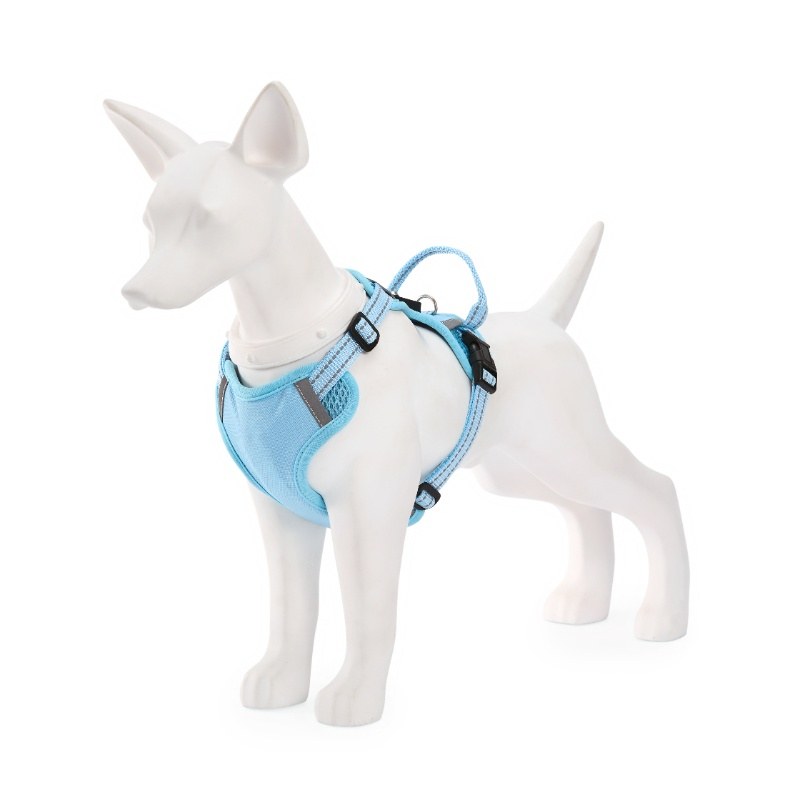
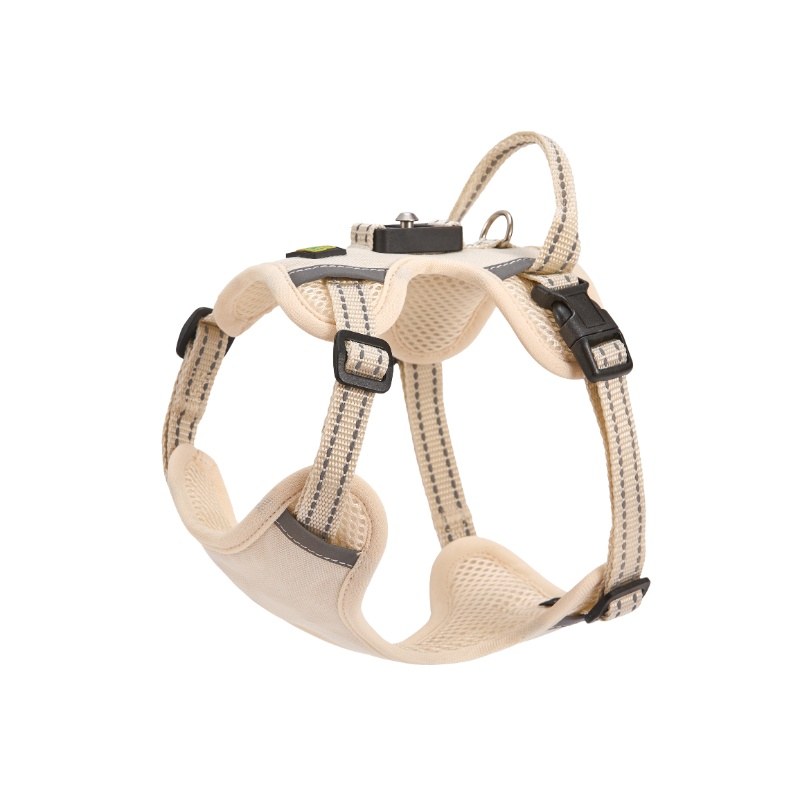
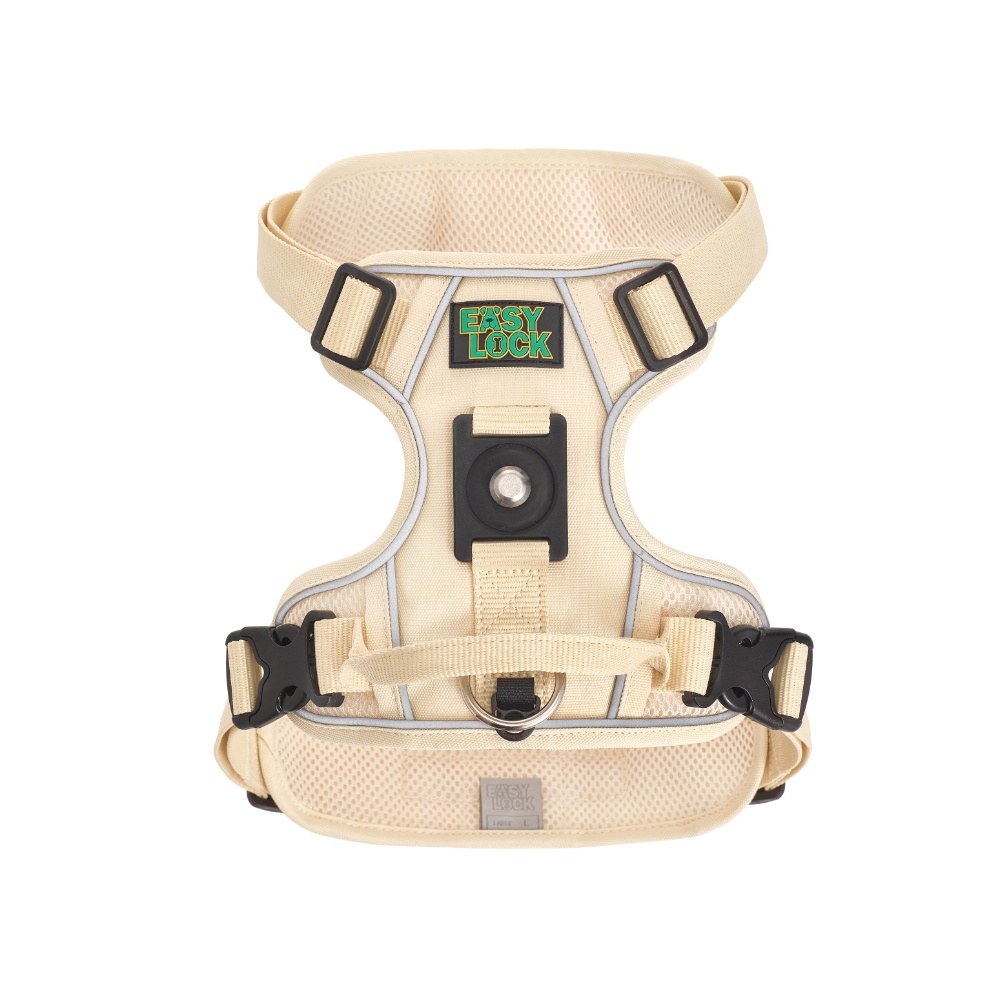
A custom adjustable dog harness is built in a fixed order: fit target, webbing, hardware, colour. Colour comes last because it is the only variable that can change without forcing a new pattern. Reversing that order is the most common reason a development programme restarts twice.
A custom adjustable dog harness is a sequence of four locked decisions rather than a design exercise, and each decision narrows the next. Fit geometry locks first, then webbing, then hardware, then colour. Webbing width constrains the slider, the slider constrains stitch placement, and colour constrains nothing structural at all — which is precisely why it belongs at the end.
The sections that follow work through that order: the four customization levels and what each costs in time, webbing as the first lock, hardware substrate and load class, colour as a controlled last step, the six sizing numbers a factory actually needs, and the cost drivers that never appear in a sample. Each section ends with the decision a brand team should have made before the next round begins.
Four Levels of Customization, and What Each Costs in Time
Custom work in this category falls into four levels, and most scope disputes come from a brand briefing one level while being quoted another. Private label uses an existing pattern and closure with your branding, requiring no tooling and no new pattern. Configured OEM keeps the pattern and changes webbing colour, edge finish, hardware finish and trim, so fit is already proven and only the visual programme is new.
Modified OEM changes a dimension — panel width, strap length, D-ring placement, adjustment layout — and brings pattern work, fitting and re-testing with it. New development means a new silhouette, closure architecture or size system, which is a programme measured in seasons rather than weeks. Naming the level in the first meeting is what prevents a brand from planning a configured timeline while buying modified work.
Webbing: The Decision That Locks Everything Else
Webbing is the first lock because width, weave and edge finish determine what the rest of the harness can do. Width sets load capacity and visual weight, weave density sets how the strap behaves inside a slider, and edge finish sets how it feels against skin. For small-breed programmes 15 to 20 mm reads as proportionate, while large breeds need 25 mm and above to spread load across a wider band.
Wider is not automatically more comfortable, since extra width adds stiffness at the shoulder turn, which is exactly where chafe begins. The correct width is the narrowest one that carries the load without concentrating pressure, and weave density follows the same logic: a tighter weave holds adjustment better but feels stiffer, while a looser weave is softer against the dog and creeps unless the slider is matched to it. Because EASY LOCK weaves its own webbing, weave and finish can be reset to suit a specific slider rather than sourcing the closest available strap; constructions are shown on the harness fabric page, with a premium route covered in the leather harness option.
Hardware: Substrate, Coating and Load Class
Three questions settle every metal part: what the substrate is, what the coating is, and what load class was verified and how. Plated zinc alloy is common and not automatically wrong, but it corrodes once plating wears through, and plating wears fastest where the harness flexes. Stainless contact surfaces in AISI 304 or 316 cost more per component and far less per return, with ASTM B117 salt-spray data providing the comparison that matters.
The slider is the most overlooked part on an adjustable model. A cam-style slider holds better on firm webbing, while a friction slider suits softer webbing but needs a tighter weave to prevent creep. "An adjustable slider" is not a specification; a slider model matched to a webbing construction, tested after five wash cycles, is. That pairing is the difference between a harness that keeps its fit for two seasons and one that is re-adjusted on every walk.
Colour: Deliberately the Last Decision
Colour is the most important decision to a brand team and the least constrained decision to a factory, which is why it belongs last. Dyed webbing is produced in lots, and lot variation is a physical property of textile production rather than a quality failure. Approving colour against a laboratory dip instead of a production-run sample is how a brand ends up rejecting a delivery that is technically inside tolerance.
Two practices reduce the risk without slowing the launch. Approve every colour on a production-run sample, and consolidate the palette, because six strong colours dye more consistently and merchandise better than twelve thin ones. A consolidated palette also shortens changeover time on the loom, which is one of the reasons a narrow range can be reordered faster than a wide one.
Sizing: The Six Numbers a Factory Needs
Custom programmes fail at sizing more often than anywhere else, and they fail because the brief describes intent instead of geometry. "Fits medium dogs" is intent; "chest girth 55 to 70 cm, neck 35 to 45 cm" is geometry. A workable specification contains six numbers: chest girth range per size measured on the dog, neck range with the closure position defined, chest panel depth at centre front, strap width and whether it changes across sizes, adjustment travel per slider in millimetres, and post-wash dimensional tolerance stated as a value.
Test fit at both ends of each size's adjustment range rather than only in the middle, because a harness that fits mid-range will be returned by the customers at the edges. Those edge customers are usually the ones with the most difficult proportions, so they are also the ones whose returns cost the most to process and the most to replace.
| Stage | Output | What gets approved |
|---|---|---|
| Brief and feasibility | Customization level, pattern route, material options | Scope, not design |
| Pattern and prototype | First physical sample in final materials | Fit and construction logic |
| Fit round | Revised sample across at least three sizes | Grading at both ends of the range |
| Testing | Pull, cycle, wash, colour and abrasion data | Test report, not verbal assurance |
| Pre-production | Golden sample, approved colour, packaging proof | The reference for bulk |
| Bulk | Production with AQL inspection and lot records | Inspection report per lot |
Sampling Rounds and What Each One Should Prove
Each sample round in a custom adjustable dog harness programme should prove one specific thing, because mixing fit, material and production questions into a single sample produces an approval that answers none of them. Round one proves geometry: the sample should be cut in a stable material with the intended panel depth, adjustment travel and strap width, so the fit check is not distorted by a substitute fabric. Round two proves the material combination, rebuilt in production webbing, hardware and finish, then washed and re-fitted, recording slider grip and post-wash dimensions.
Round three proves production intent, and the sample should come from the actual cutting and assembly process rather than a prototype bench, because tolerance stack-up appears at this stage rather than at the design stage. Approve only after round three. Signing off at round two is how programmes reach bulk production with a fit that no longer matches the approved reference, and by then the correction belongs to nobody.
Cost Drivers That Do Not Show Up in the Sample
Two visually identical harnesses can sit at very different cost points, and the difference is rarely in the colour. Stitch density at load points, the substrate under a plating, inspection steps, dye-lot consolidation and whether webbing is woven to order all move cost more than trim shade. When a quotation looks unusually low, the saving sits in one of those five places, and asking which one directly is the fastest way to understand what you are buying.
A supplier who can name the trade-off is a supplier you can plan with, because the answer tells you where the risk will appear in season two: at the anchor, at the plating, or at the colour match between reorders. A supplier who cannot name it has probably not costed the item either.
The EASY LOCK Position
EASY LOCK was founded in 2018 on more than 15 years of webbing manufacturing experience and supplies OEM and ODM programmes to customers in 15 countries. Because both the webbing and the closure are built in one facility, configured and modified customization can be handled without re-proving the fundamentals.
Our platform is the fifth-generation EASYLOCK magnetic system, developed over three years with more than 100 rounds of material testing and protected by national patents including the Mag-Clip single-touch release, with sizes running XS to XL on consistent hardware. We are a factory and supplier rather than a retail brand, so customization questions reach the people who set the production parameters; the Pastel Collection shows how far a palette can move within one engineering platform.
Frequently Asked Questions
Q1: How long does a custom adjustable dog harness program take?
It scales with the customization level rather than the model. Configured programmes move quickly because the pattern is proven, while modified and new-development work adds pattern time, fitting rounds and re-testing that cannot be compressed without pushing risk into bulk.
Q2: Can one program mix webbing types?
Yes. A softer weave at the chest contact zone and a firmer one on adjustment straps is a legitimate design. Each combination needs its own wash and abrasion validation, so the test matrix grows quickly.
Q3: How is pattern exclusivity handled?
It is a commercial term rather than a technical one. Pattern ownership, exclusivity period and tooling disposition should be written into the agreement at the brief stage rather than added afterwards.
Q4: What should be in the first brief?
The first brief needs six things: target market and channel, intended size range, a reference product and what specifically works about it, colour direction, packaging expectations, and a realistic first quantity per colour. A brief that omits the reference product usually comes back with a pattern the buyer did not want, because "adjustable" alone describes almost every harness on the market.
Final Thoughts
A custom adjustable dog harness is a sequencing problem before it is a design problem. Lock fit, then webbing, then hardware, then colour, and approve on a production-intent sample rather than on a prototype that was never meant to be manufactured. More on material and production practice is in our industry articles, and the order above is what makes a custom adjustable dog harness programme predictable.
Turn Your Brief Into a Sample
Send us your fit targets and colour direction. We will return a material proposal, a grading plan and a development schedule.
Start a Custom Development Brief